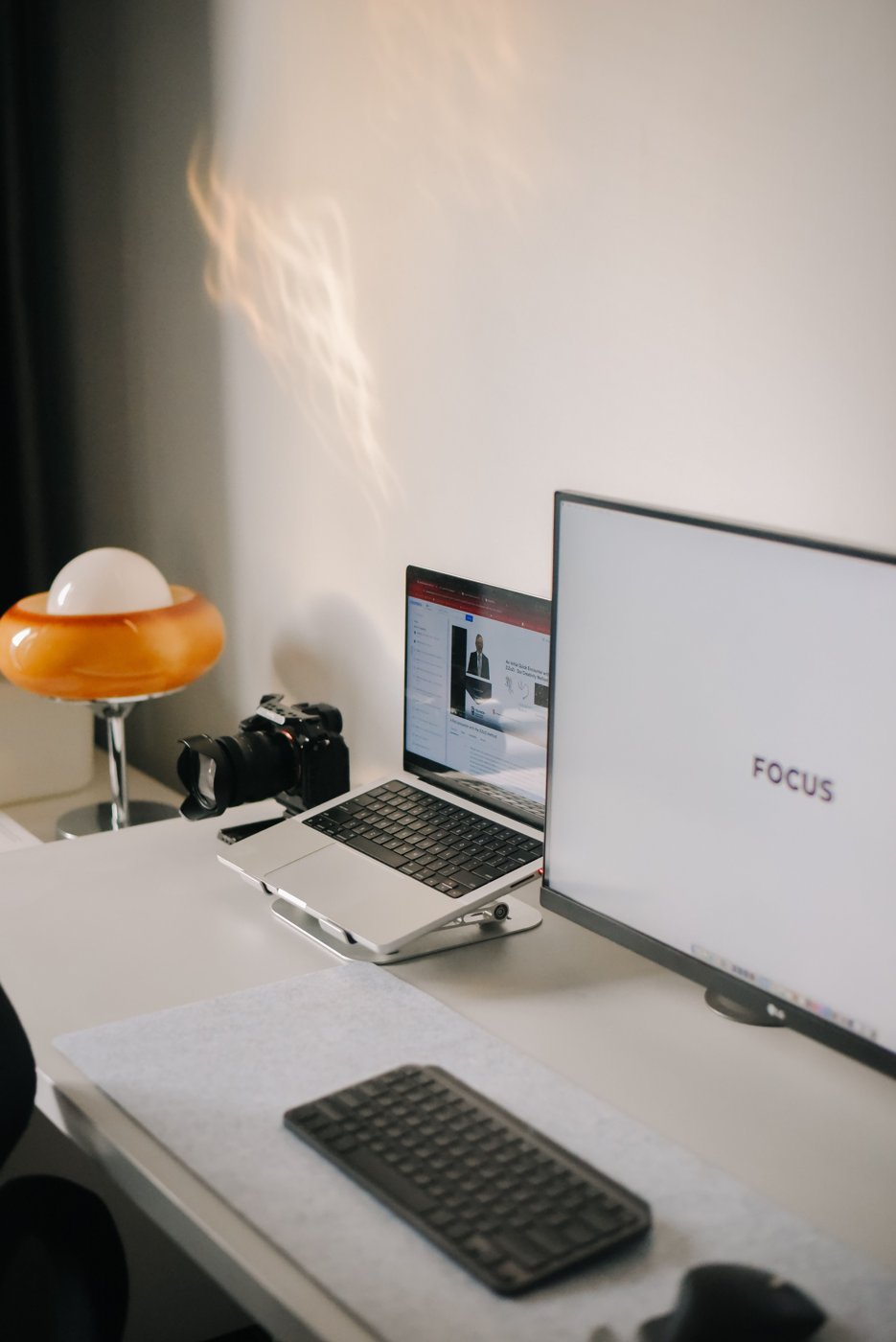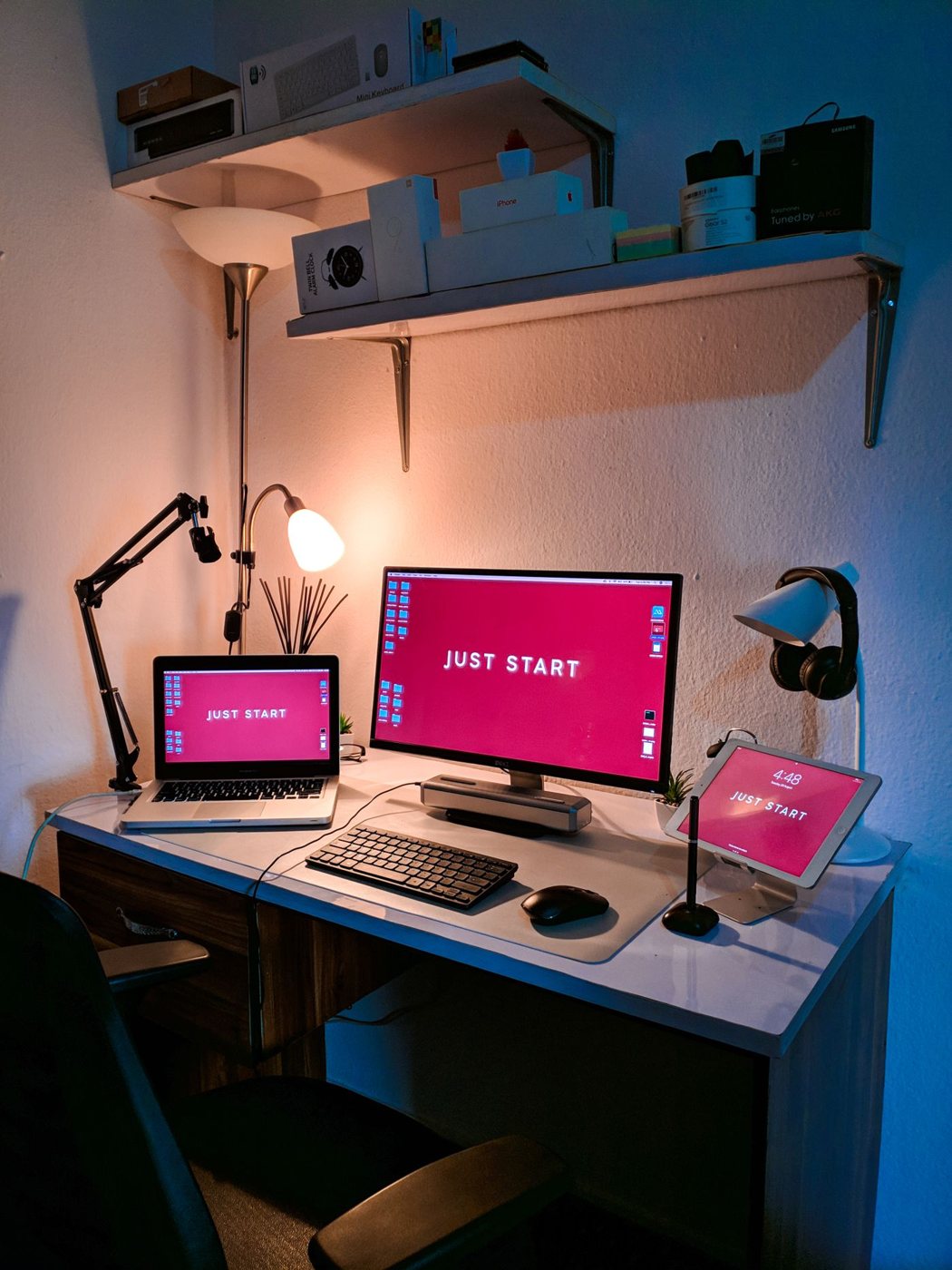
A screen finish is easiest to judge with a reflection present. Under controlled showroom lighting, two displays can both look attractive while behaving very differently beside your window. Look for a way to evaluate the finish under conditions similar to your intended workspace.
Glossy surfaces tend to show more defined reflections, while matte treatments disperse them. The exact result depends on the coating and the room, so the labels alone do not tell you how distracting either screen will be. A heavily textured finish may also look different from a lighter antiglare treatment on a white document.
Bring ordinary content to the comparison
Inspect small dark text on a pale background, a photograph with shadow detail, and the applications you use every day. Move your head slightly and look at the panel from the expected seating distance. A finish that works well for a film in a dim room may be less agreeable for reading beside a bright window.
Separate the coating from the panel's other characteristics. Contrast, brightness, resolution, and color settings can influence the comparison. If one demonstration screen is dramatically brighter or more saturated, ask to use comparable settings before attributing the difference to matte or glossy treatment.
Think about how much control you have over light. A fixed home desk may allow curtains and lamp placement to manage reflections. A laptop used in many locations must cope with more variation. That difference can matter more than a preference formed in one carefully arranged room.
Consider the costs of an afterthought
An added film may change reflections, but it can also affect clarity, touch response, or the way the display closes. Check the device manufacturer's guidance and the film's fit. Do not assume an accessory will recreate the appearance of a factory surface treatment.
For pen input, evaluate the feel and visual result together. A surface with more resistance may suit one person's drawing technique while another prefers a smoother glide. Check replacement nib availability and compatibility rather than treating a particular finish as universally better for creative work.
Finally, review the return policy with enough time to try the screen at your desk. Look at it during daylight and under evening lighting, using a realistic document rather than a vivid demonstration image. Choose the finish whose compromises remain acceptable across those conditions. If reflections can be fixed by moving a lamp, you may not need to choose a different screen at all.