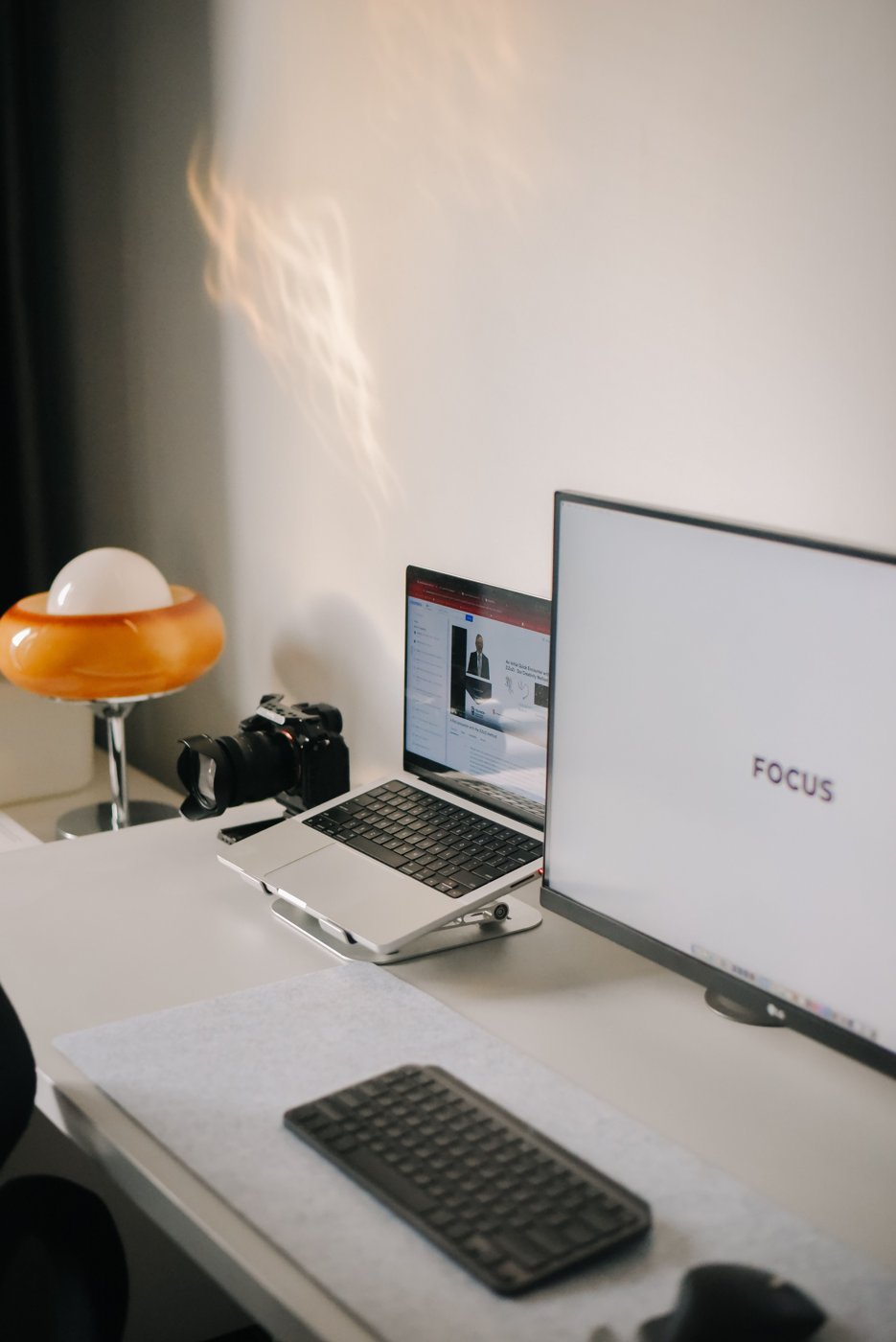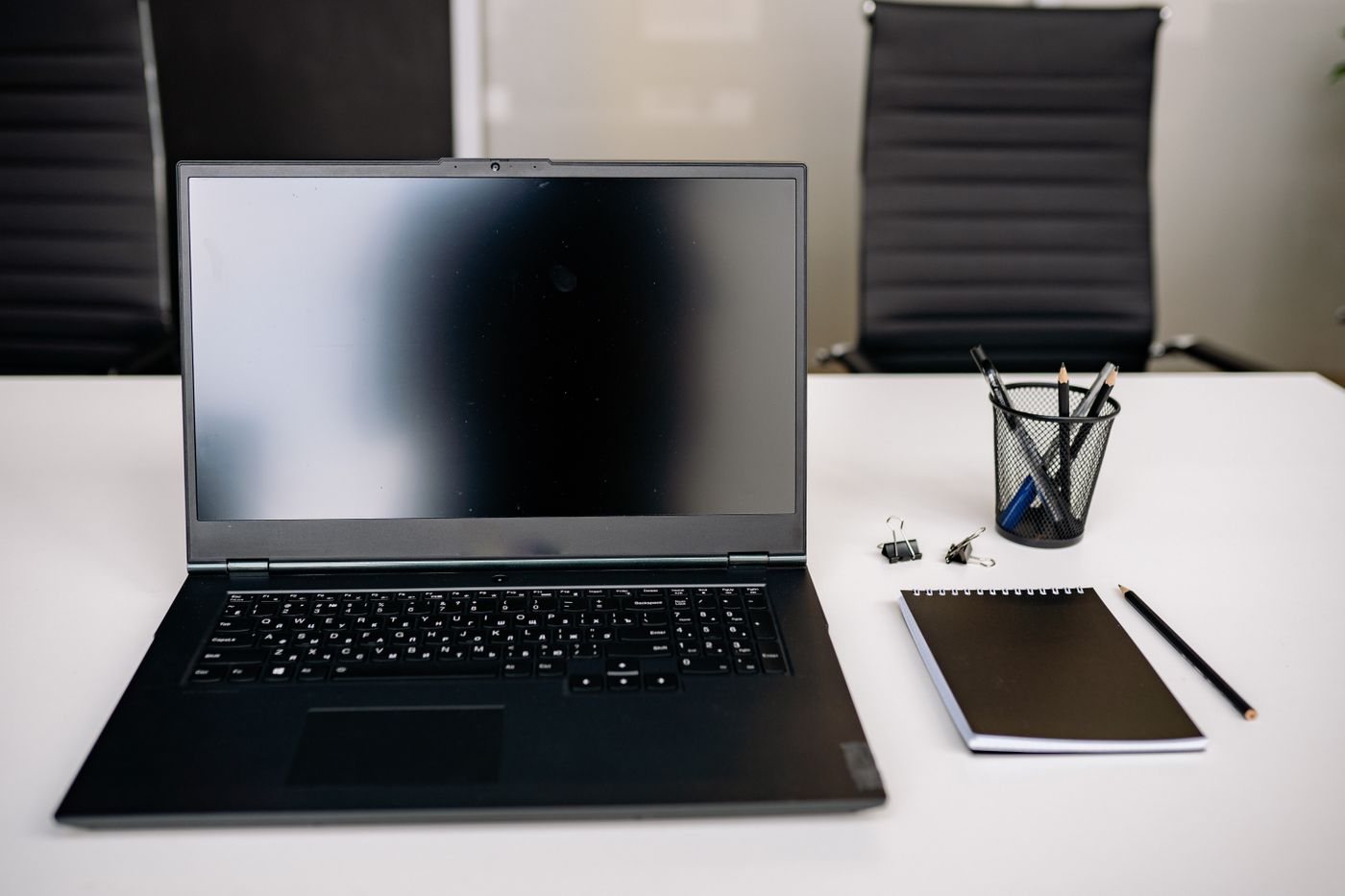
Turn the screen dark briefly and look from your normal seated position. A window, ceiling fixture, or desk lamp reflected in the panel often becomes easy to identify. Then return to your usual document and note when that reflection competes with the text. This separates a lighting problem from a display that simply needs a brightness adjustment.
Follow the reflection to its source
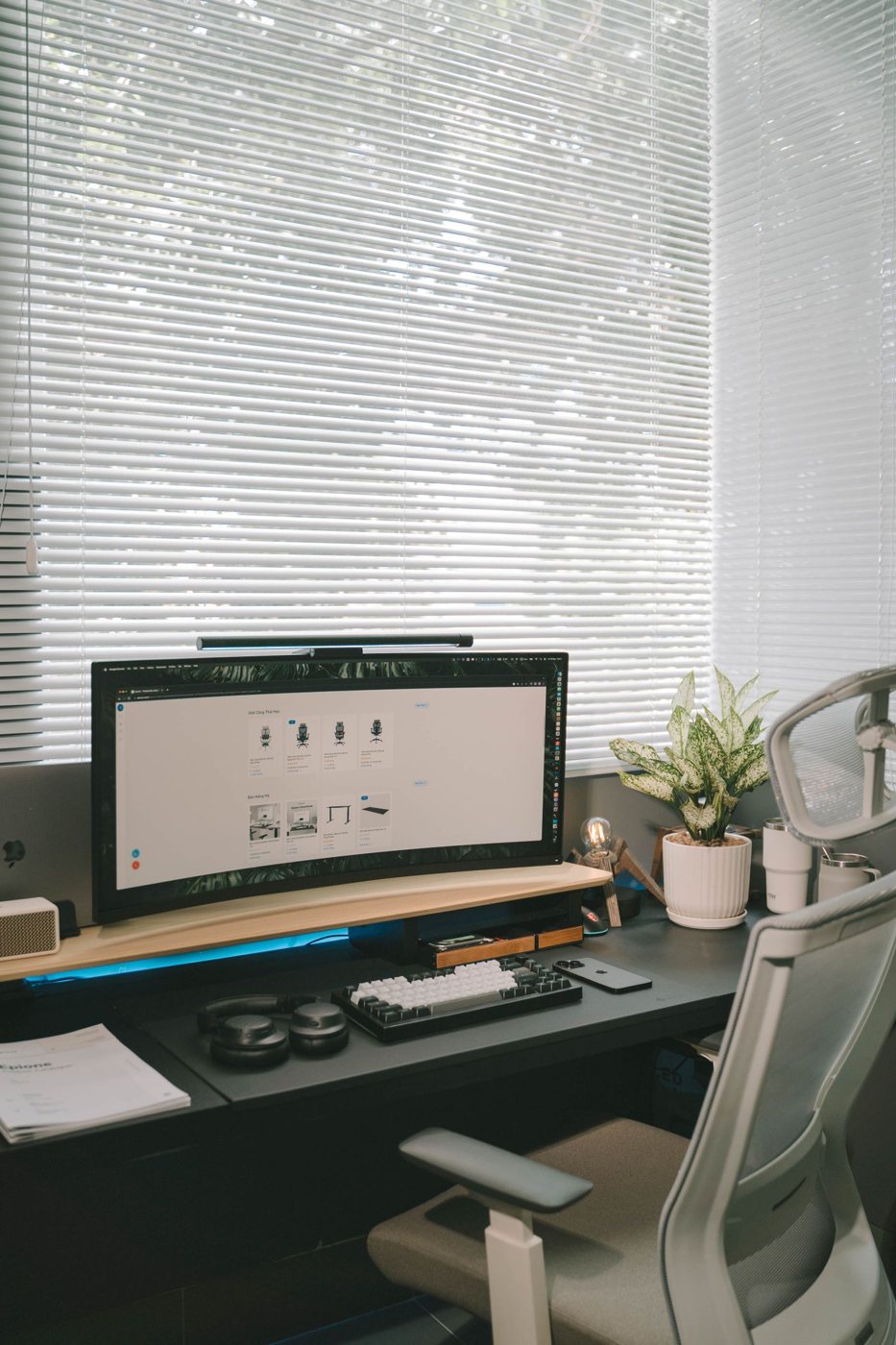
Try a small change in the desk or screen orientation before adding equipment. OSHA recommends arranging screens at right angles to windows and light sources as part of glare control. In a real room, a modest rotation may be enough to move a reflection out of the central reading area.
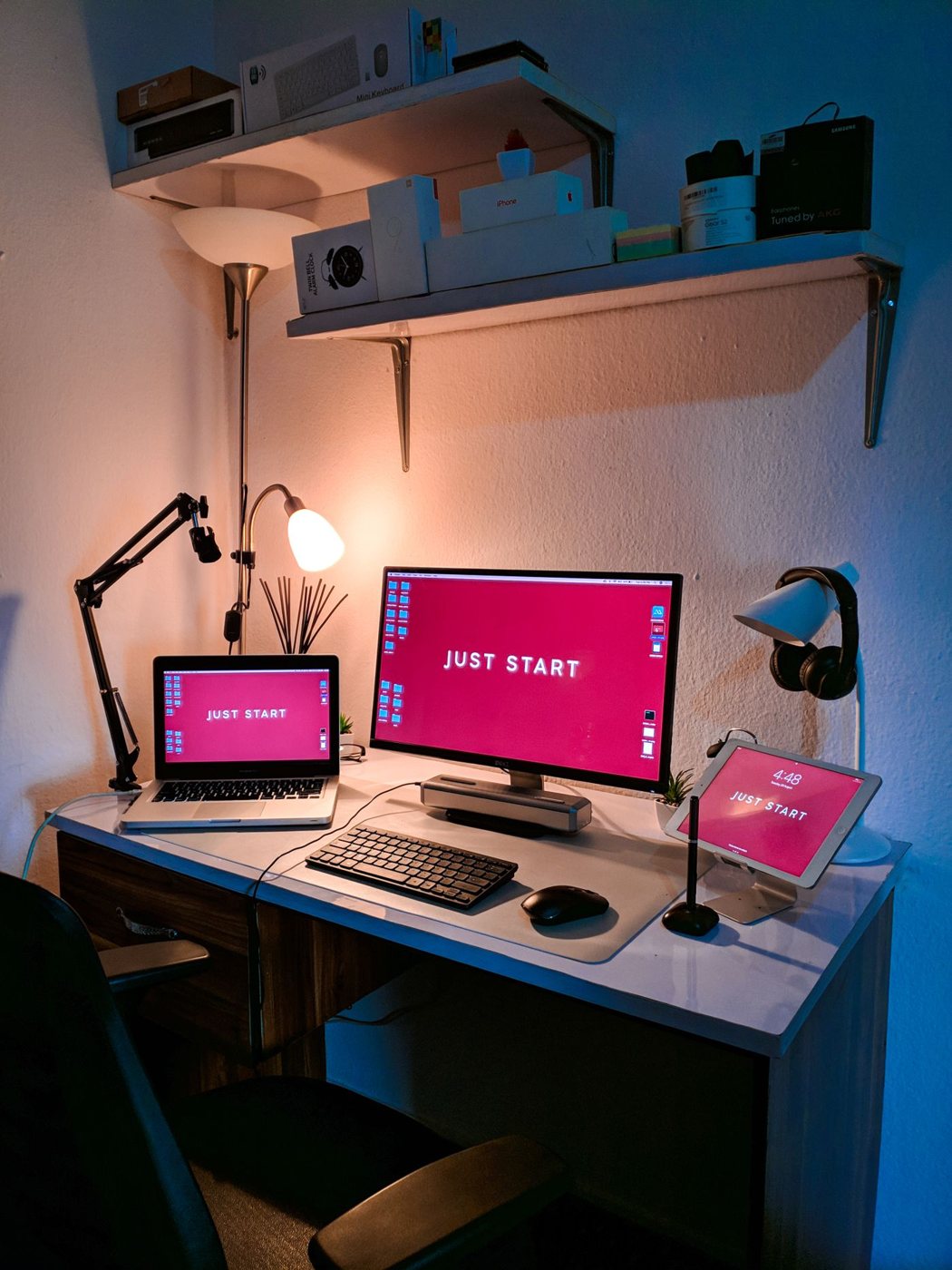
Check at the times you actually work. A window that causes no issue in the morning may reflect low afternoon light. Adjustable blinds or curtains can be more useful than a permanent compromise in monitor position. A task lamp should illuminate paper without appearing as a bright spot in the screen.
Do not solve every reflection by raising display brightness to maximum. That may make some content easier to see, but it leaves the reflected source in place and can make the screen look harsh relative to the room. Aim for a comfortable relationship between the display and surrounding surfaces.
Evaluate filters as part of the setup
A matte coating spreads reflections differently from a glossy surface, but it does not remove the need to control lighting. If considering an add-on glare filter, inspect it with fine text and the colors you use. Check attachment, fit, and whether it introduces a visible texture or reduces clarity.
A privacy filter has a different primary purpose and can narrow viewing angles or dim the image. Do not assume it is interchangeable with a glare solution. Shared viewing and color-sensitive work may be especially affected, so test the actual combination before committing.
Clean dust and fingerprints according to the screen manufacturer's instructions. Avoid adding an unapproved coating or cleaning product in an attempt to alter the finish. Damage to a surface treatment is harder to correct than a misplaced lamp.
After changing one source of glare, use the screen for a normal task and check again from your seated position. Record which adjustment helped if other household members move the lighting. A repeatable room arrangement is more useful than a one-time setting that works only with every curtain closed.