Look back at the last few times you needed a printed page. What was printed, how quickly was it needed, and could another method have served the purpose? A handful of urgent forms can justify a home printer differently from a large but predictable annual document batch.
Describe the output
Separate ordinary text, color charts, photographs, labels, and unusual paper sizes. Not every printer supports every medium. Check the required paper path, supported thickness, and output dimensions rather than assuming a general-purpose model can handle all occasional jobs.
Consider scanning and copying separately. If those are the main tasks, a scanner or an existing phone workflow may solve the need without a printer. If physical copies must be made quickly, a multifunction device may be more convenient than combining several tools.
Estimate a normal month's volume and how irregular it is. Include household use if several people will share the device. A pattern of long idle periods followed by a large job creates different requirements from printing a few pages every day.
Compare access with ownership
Check nearby printing options for the work that can be handled elsewhere. Consider opening hours, travel, file submission, and any confidentiality requirements. Do not send sensitive documents through an unfamiliar service merely because the per-page price is low.
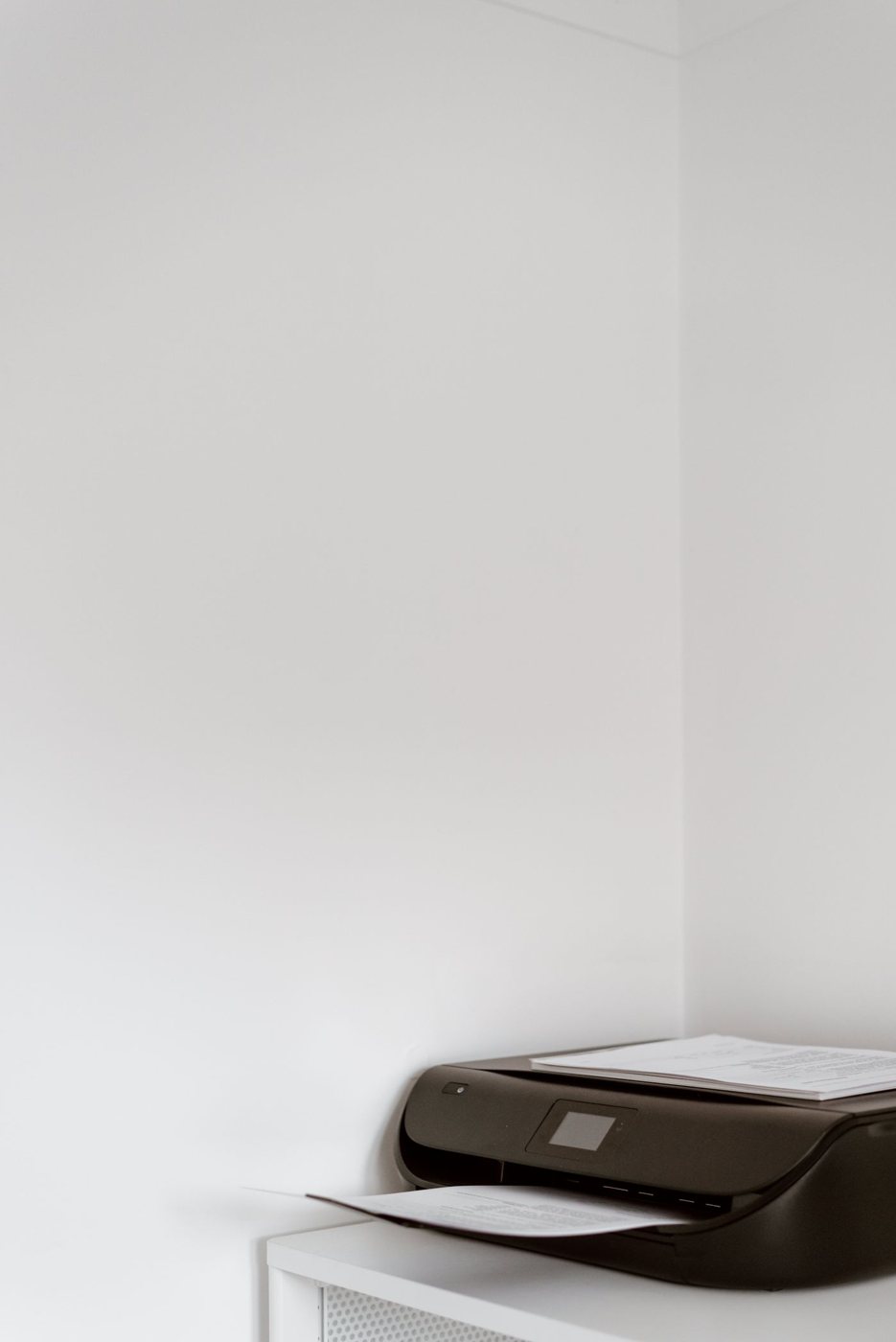
For ownership, include supplies, paper, any required maintenance items, and the space needed with trays open. A printer that fits on a shelf while closed may require much more room for feeding and collecting paper.
Read the connection and software requirements. Confirm that the printer supports your computer and phone if both matter. Check whether an account, subscription, or continuing internet connection is required for the features you intend to use, and understand any optional program before enrolling.
Decide who will keep supplies available and handle a stalled job. A shared printer is less useful if nobody knows which cartridge fits or how to select it from the computer. Keep the model information and supply details in an accessible household note.
Buy when the combination of frequency, urgency, and control makes ownership worthwhile. If the need remains rare and predictable, an outside service can preserve desk space and avoid maintenance. If printing is regularly time-sensitive, choose a machine around that actual pattern rather than a low entry price that hides inconvenient running requirements.