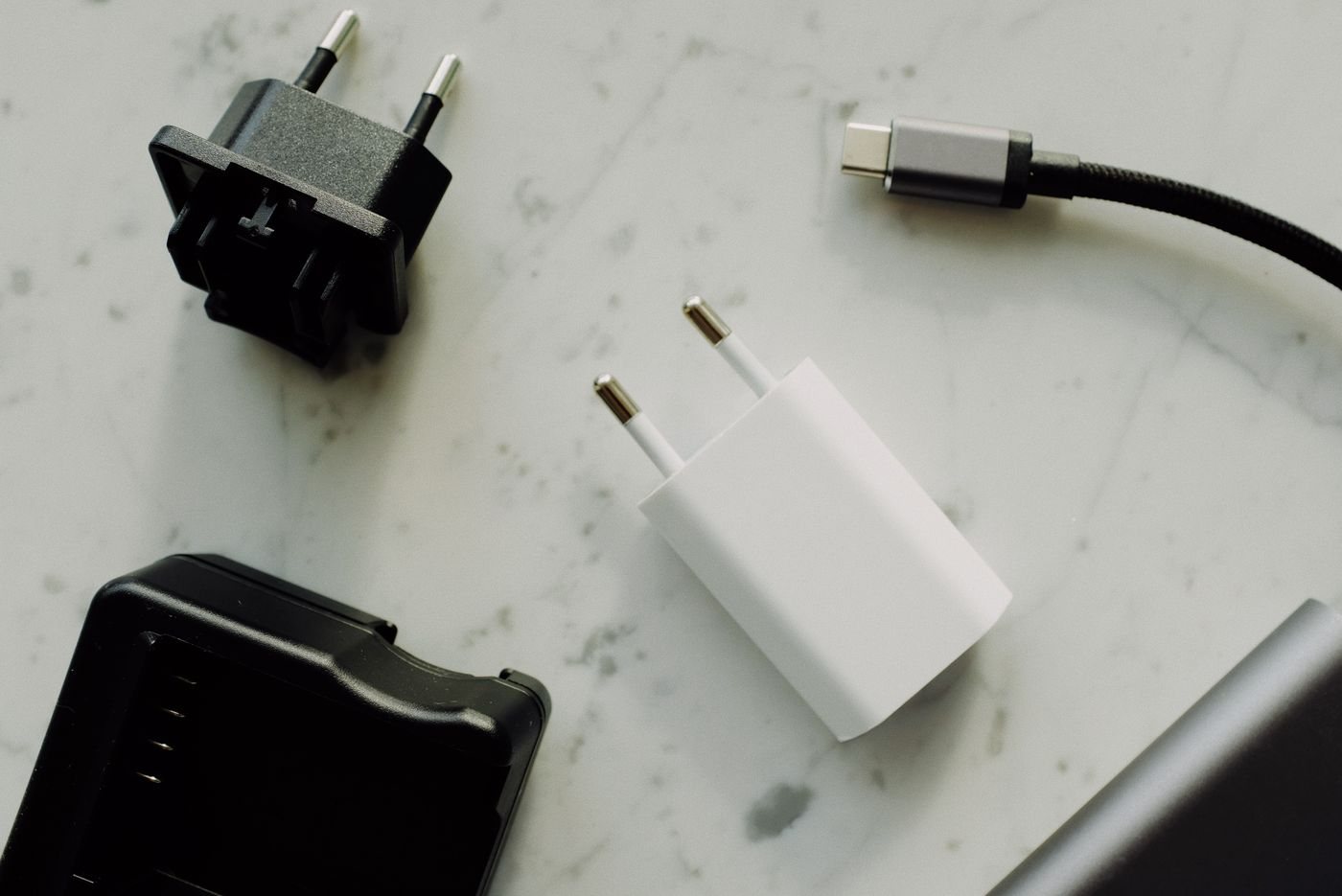
A shared charging area can reduce the daily search for cables, but it should not become a pile of devices and unidentified adapters. Begin with the equipment that actually charges there. List the devices, their charging requirements, and whether they stay overnight or are connected briefly during the day.
Use compatible chargers and cables according to the device manufacturers' instructions. A connector fitting into a socket is not enough to establish that the complete charging arrangement is suitable. Keep each adapter's identity readable, especially when several similar units have different capabilities.
Choose a location that stays usable
Select a stable, dry location that allows the equipment to be used within its stated conditions. Keep devices and adapters uncovered and follow their ventilation requirements. A closed decorative box is not automatically appropriate simply because it hides the cables. Avoid placing the area where spills or routine movement are likely to affect it.
Plan the cable path from the power source to each device. Cables should not cross walkways, catch in drawers, or hang where they pull on sockets. Use appropriate organizers without pinching or sharply bending the cables. If a power strip is part of the setup, follow its rating and instructions; do not solve a shortage of outlets by improvising chains of power accessories.
Give each connection a recognizable role
Label similar cable ends with the device or job they serve. A short label such as tablet or work phone can be clearer than a technical specification for a shared household area, while the charger details should still remain available. Leave enough usable length to connect the device without stretching the cable taut.
Make it obvious which items are currently charging and which are ready to take away. A small clear space for disconnected devices may be enough. Avoid stacking equipment in a way that covers it or makes one person's device difficult to retrieve without moving everyone else's.
Inspect the setup when cleaning the area. Damaged cables, loose connections, or unusual heat need attention according to the relevant product guidance. Do not keep a visibly damaged accessory in the shared reserve where another person may unknowingly use it.
Review the station when a device changes. Remove obsolete or unidentified connections rather than leaving them permanently attached. A useful charging zone reduces decisions while preserving the information and access needed to use each device appropriately. Its success depends on a maintained routine, not on fitting the largest possible number of ports into one small space.