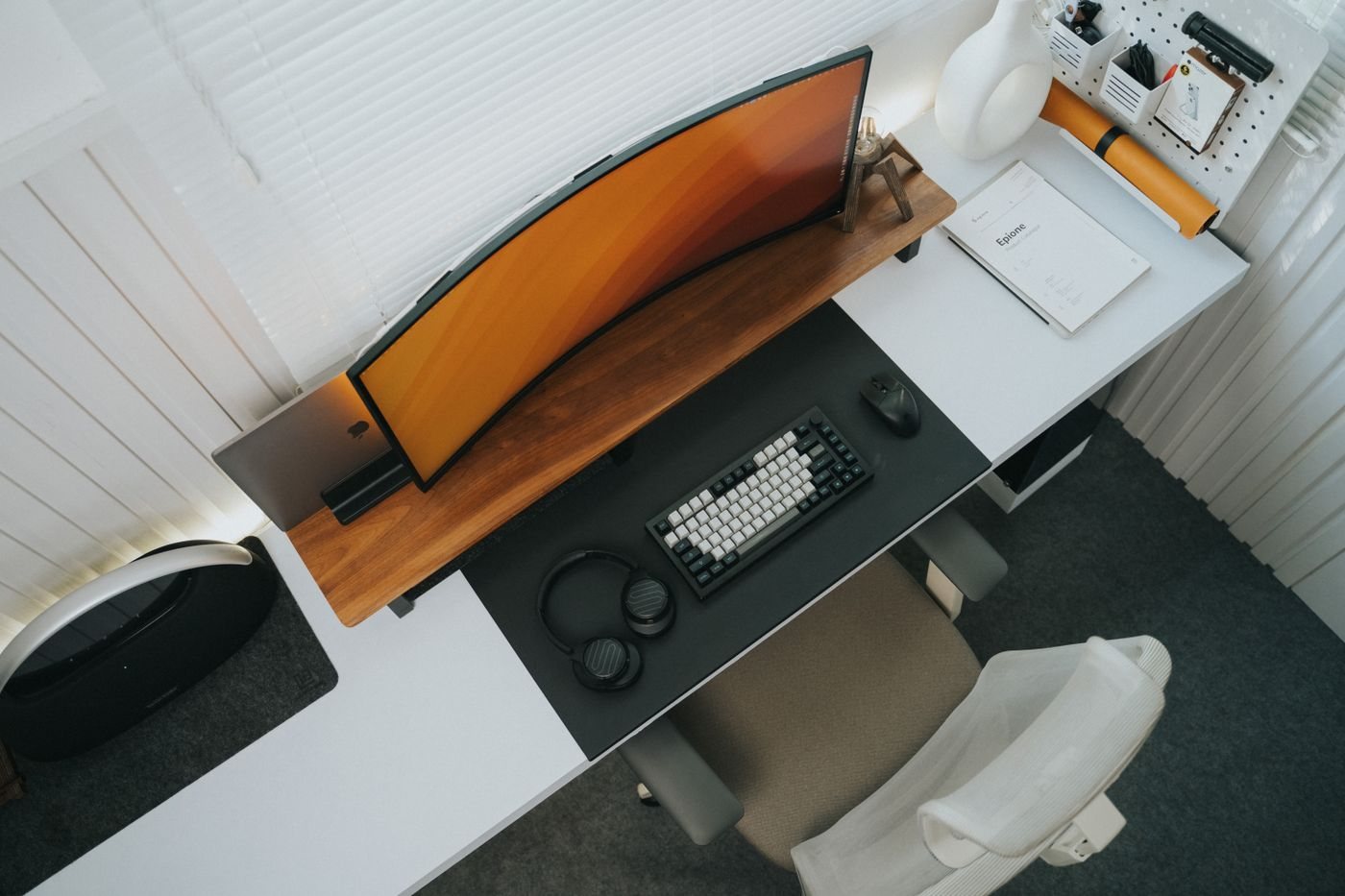
Two desks with the same width can behave very differently once a monitor is installed. A deep stand may consume much of a shallow surface, leaving the keyboard against the front edge and nowhere for a notebook. Desk depth deserves its own measurement instead of being treated as a minor detail beside the overall length.
Build a full-size trial
Measure the front-to-back footprint of the equipment you plan to keep on the surface. Include the monitor stand, keyboard, and any paper documents you routinely use. Mark these footprints on an existing table with removable paper. Leave the gaps you actually need between objects rather than fitting the rectangles together as tightly as possible.
Sit at the mock-up and perform a familiar task. Move between typing, pointing, and reading a page. Notice whether the monitor can sit at a readable distance without the keyboard becoming difficult to reach. OSHA's desk guidance emphasizes room for both component placement and leg clearance. A surface that holds everything while forcing an awkward arrangement is not a successful fit.
Account for the back edge
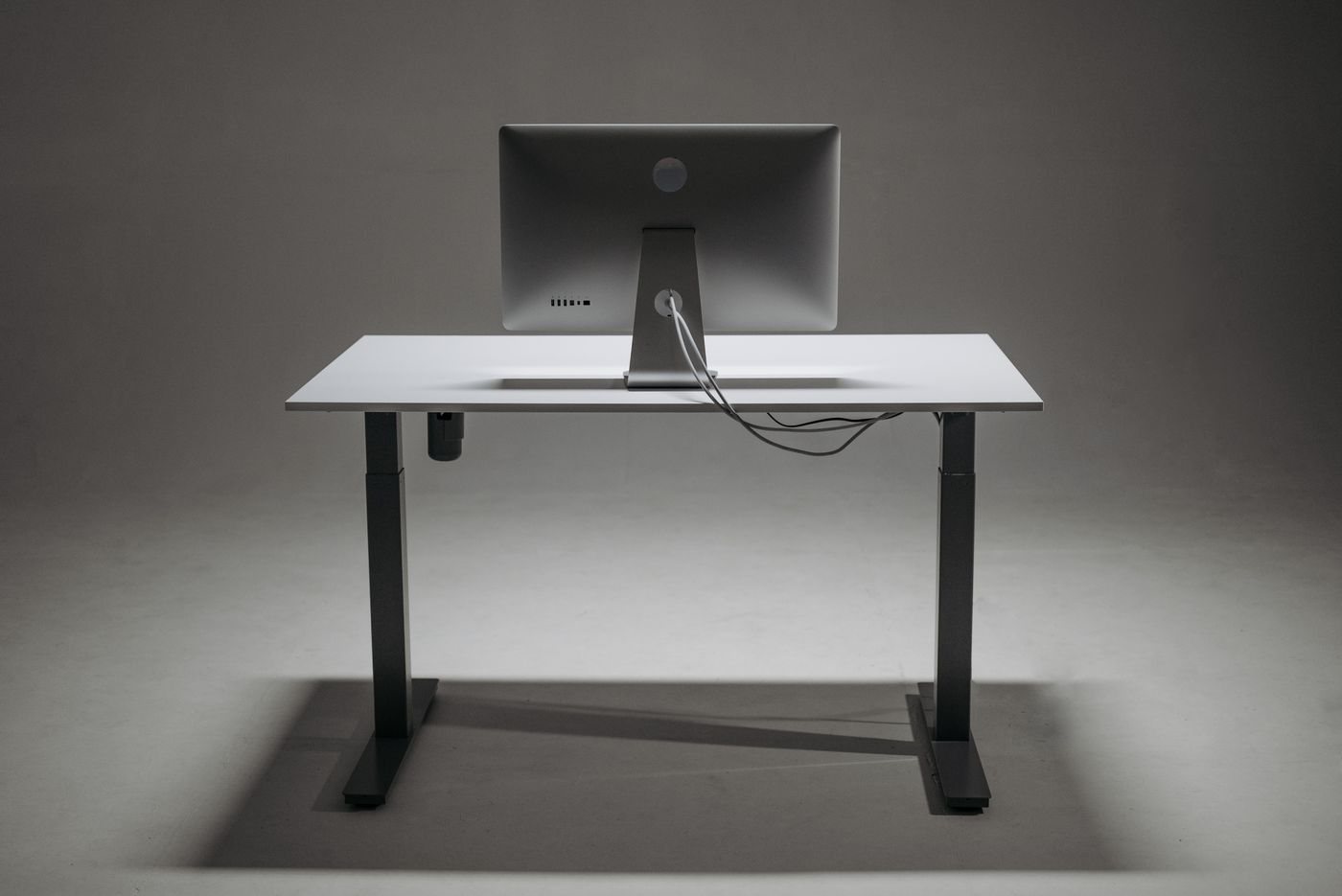
Desk measurements usually describe the furniture, not the usable space after connections are attached. Cables and connectors may need room behind a display or computer. A rear cable opening may be useful, but check whether its position works with the stand and any equipment placed above it.
If you plan to mount a monitor arm, inspect the mounting requirements before counting the stand footprint as available space. A clamp may need clearance beneath and behind the top. The arm also needs room through its movement range. An arm is a different support system, not a guaranteed way to make every shallow desk work.
Include what happens below
A deep desktop can still have poor usable legroom when a drawer, frame, or shelf occupies the area underneath. Check the structure in the position where you expect to sit. Consider whether a computer tower or storage unit would further reduce that space. Keep necessary access to controls and connectors in mind without putting equipment where it obstructs movement.
Before purchasing, compare the product's dimensional drawing with the measurements from your trial. Ask about any dimension not shown, including the depth between the front edge and a rear frame. If the room limits desk depth, reducing the equipment footprint may be more useful than selecting a wider but equally shallow model. A workable depth should support the tasks on the surface and the space you need beneath it.