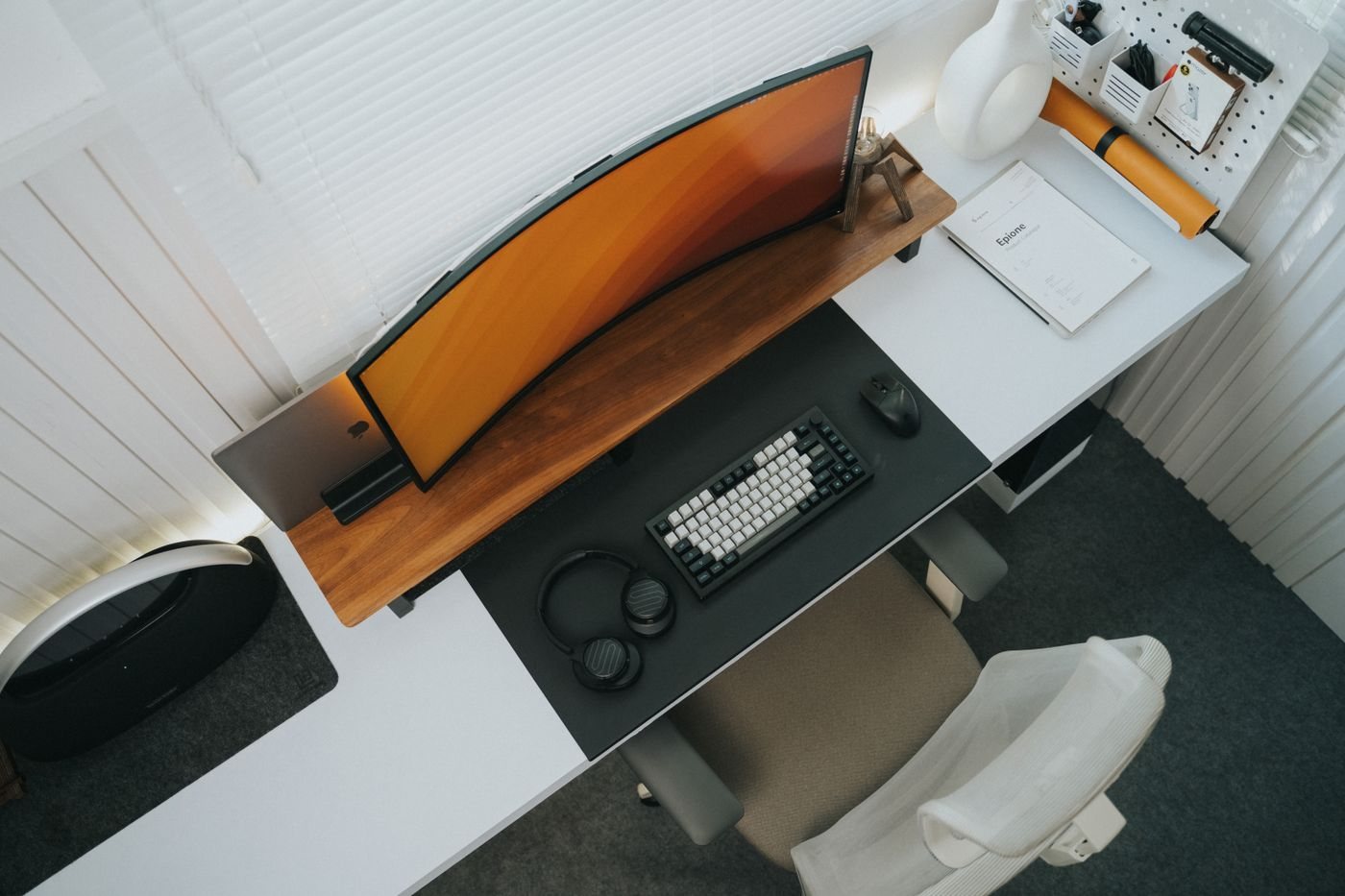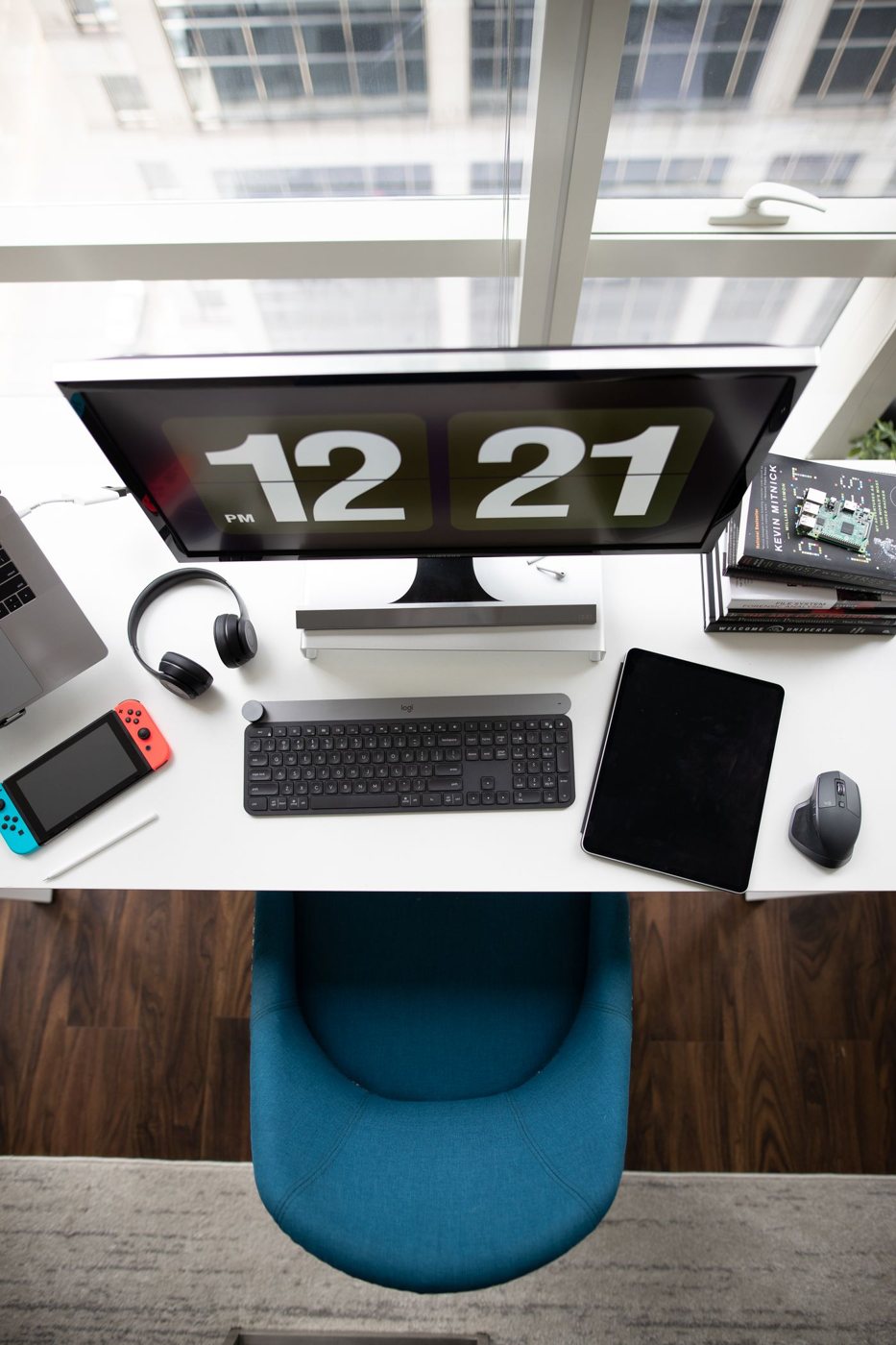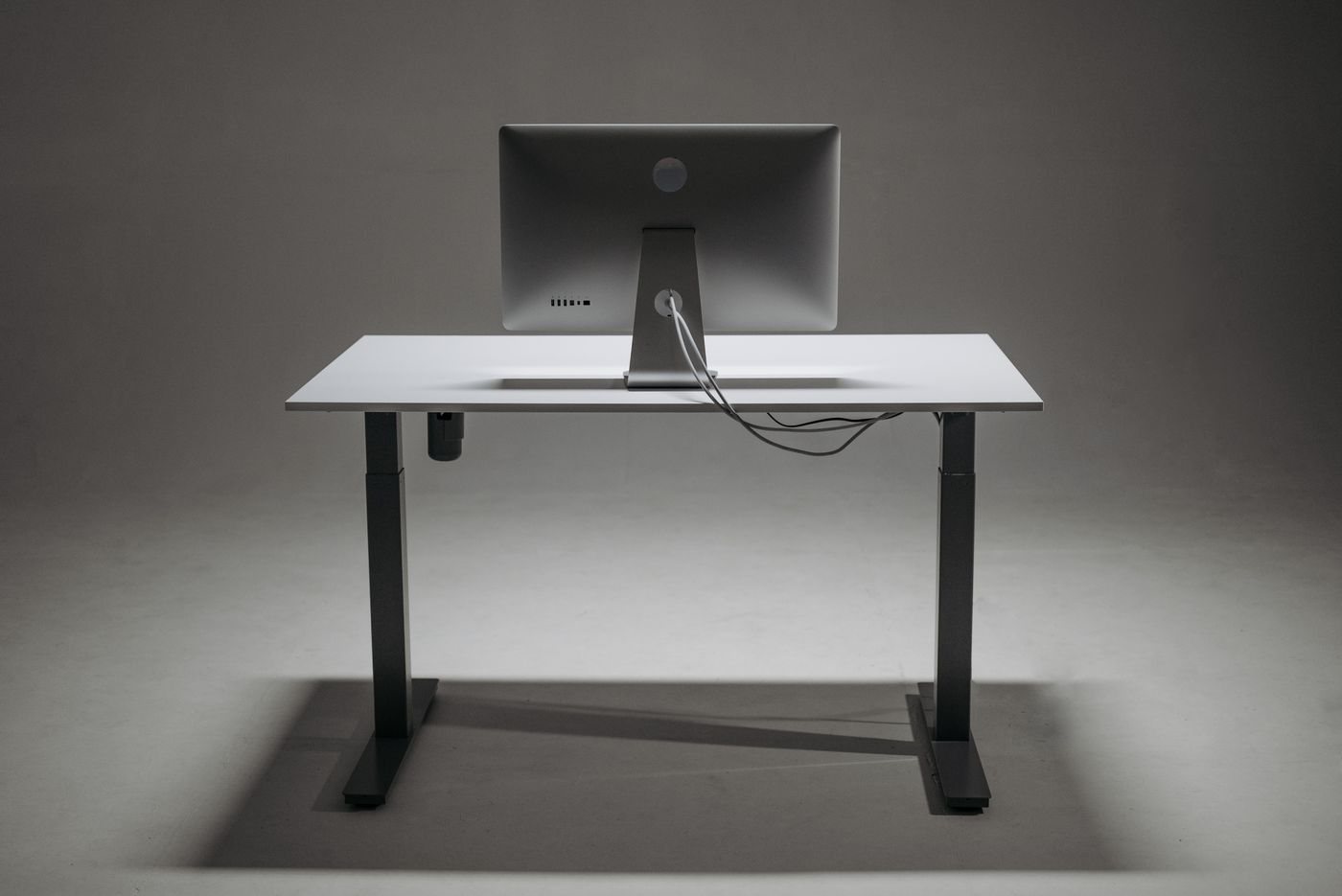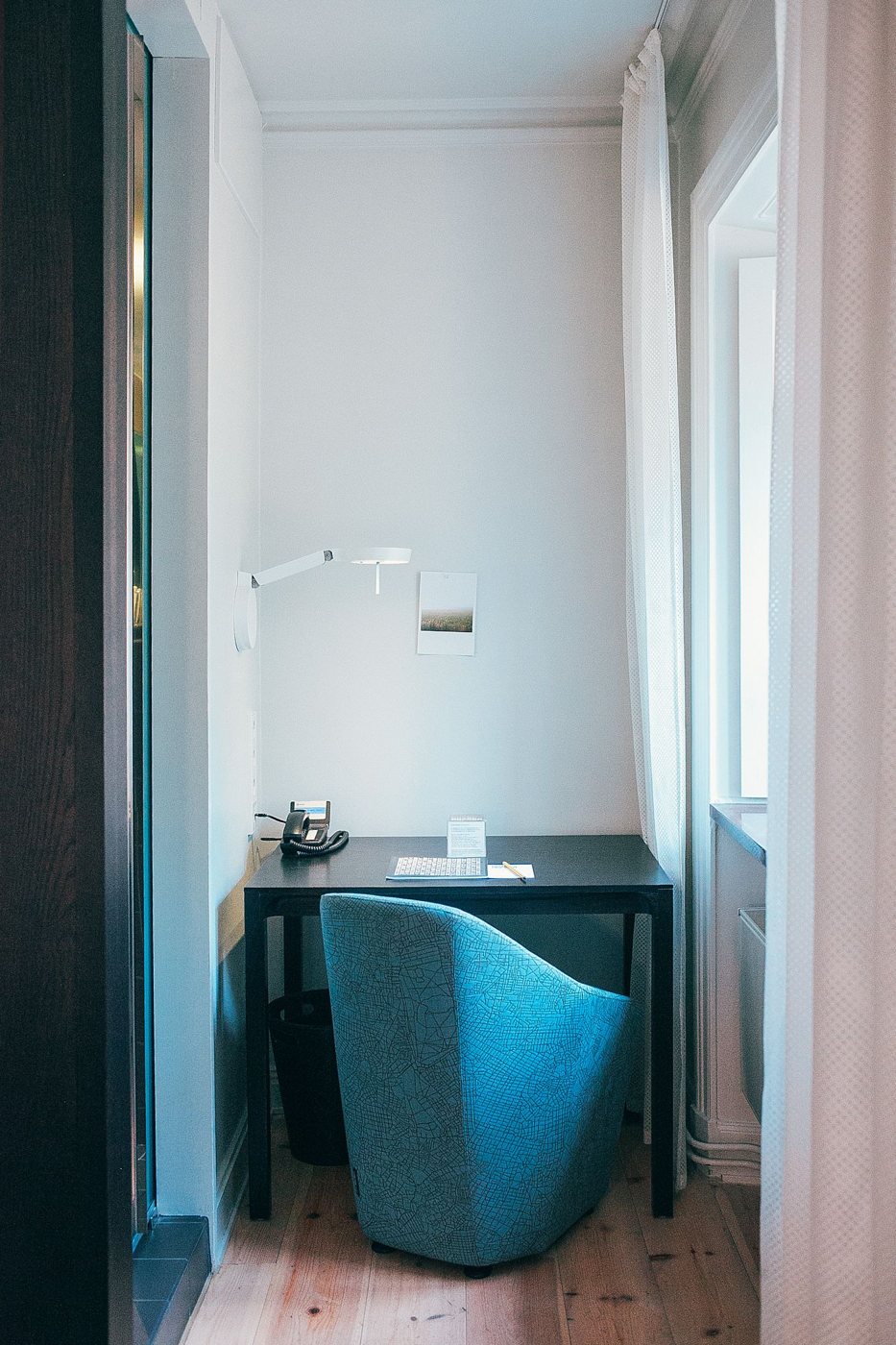
A small desk becomes crowded fastest when every possible task is permanently represented on it. The printer used twice a month, a stack of unopened mail, and spare cables compete with the keyboard used all day. Instead of looking first for a smaller version of every object, decide what needs to remain within reach during an ordinary work session.
Write down one typical sequence: open the laptop, read a reference, type, take notes, and join a call. Put only the equipment for that sequence on the desk. Keep an additional list of occasional tasks so they are not forgotten, but do not give each one permanent surface space by default.
Separate access from display
A tool can be accessible without being continuously visible. A notebook may fit in a shallow nearby drawer when not in use. A camera or headset can have a dedicated storage position that does not require untangling cables. Frequently needed controls, however, should not disappear behind a monitor just to make the surface look cleaner.
Evaluate vertical storage carefully. A shelf can hold suitable equipment, but it must be installed and loaded according to its requirements. Do not balance heavy devices on improvised stacks or block ventilation to gain space. Moving an object upward is useful only when reaching and maintaining it remain straightforward.
Test changes one at a time
Try a narrower keyboard or a different notebook position using a temporary arrangement before purchasing replacements. A compact keyboard may create mouse space but remove keys you use often. A raised laptop may free a little surface while requiring a separate keyboard and mouse. Each change has consequences beyond the size of the item being moved.
Keep a clear landing area for the task that changes during the day, whether it is a paper form, a cup, or a small device being connected. If every inch is assigned permanently, any new item forces an unsafe or awkward placement. Space left empty is part of the arrangement, not a failure to use the desk efficiently.
Give temporary items an exit
Set a small limit for papers awaiting action and give completed items a destination. Keep spare accessories in a labeled container away from the active surface. At the end of a session, remove what arrived for a single task rather than repeatedly rearranging it into a new pile.
After a week, notice which items repeatedly return to the desk and which stayed unused. Adjust their positions based on those observations. A small workspace works best when its contents match a limited set of real tasks, not when it imitates a larger setup at a smaller scale.