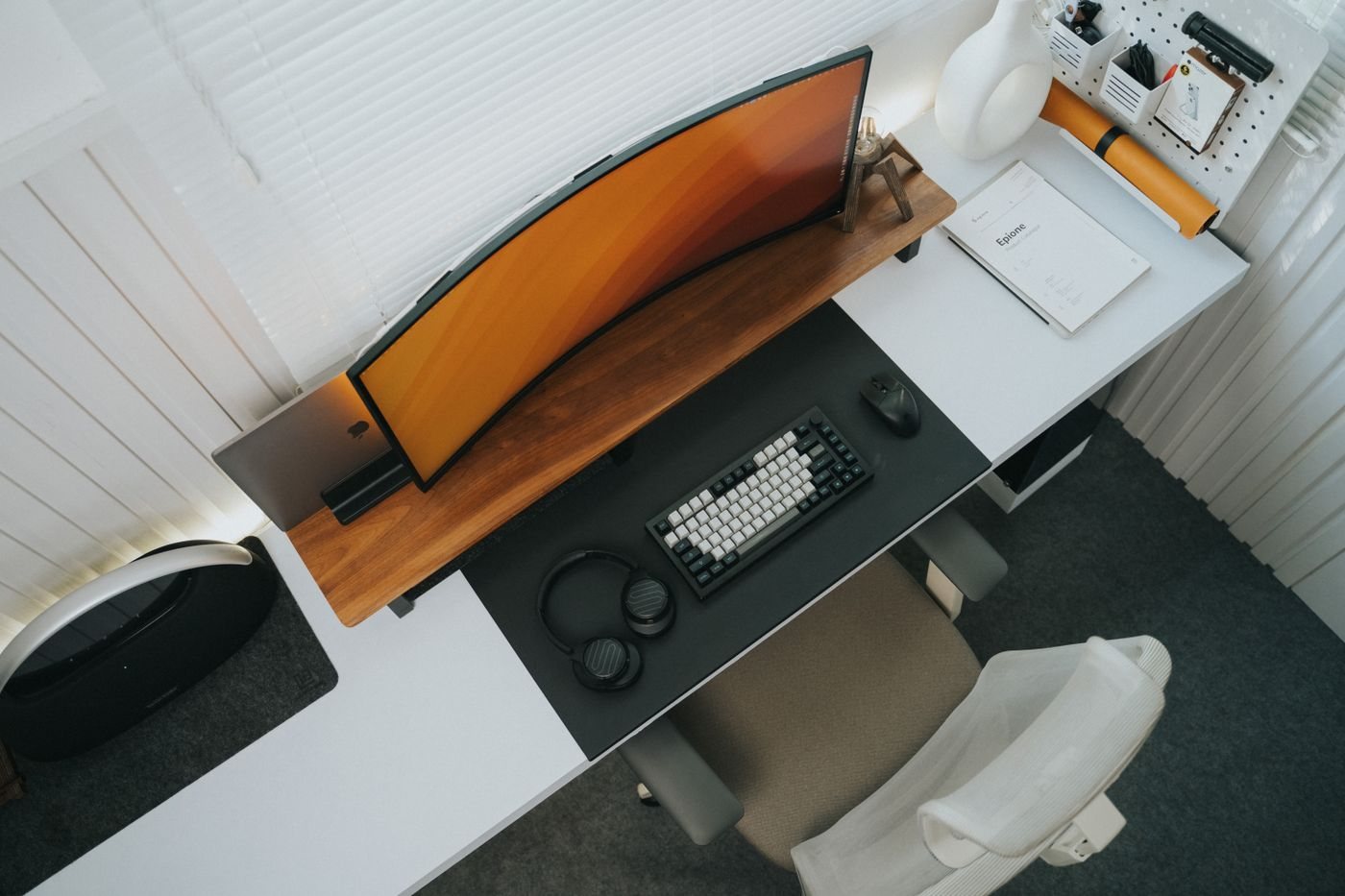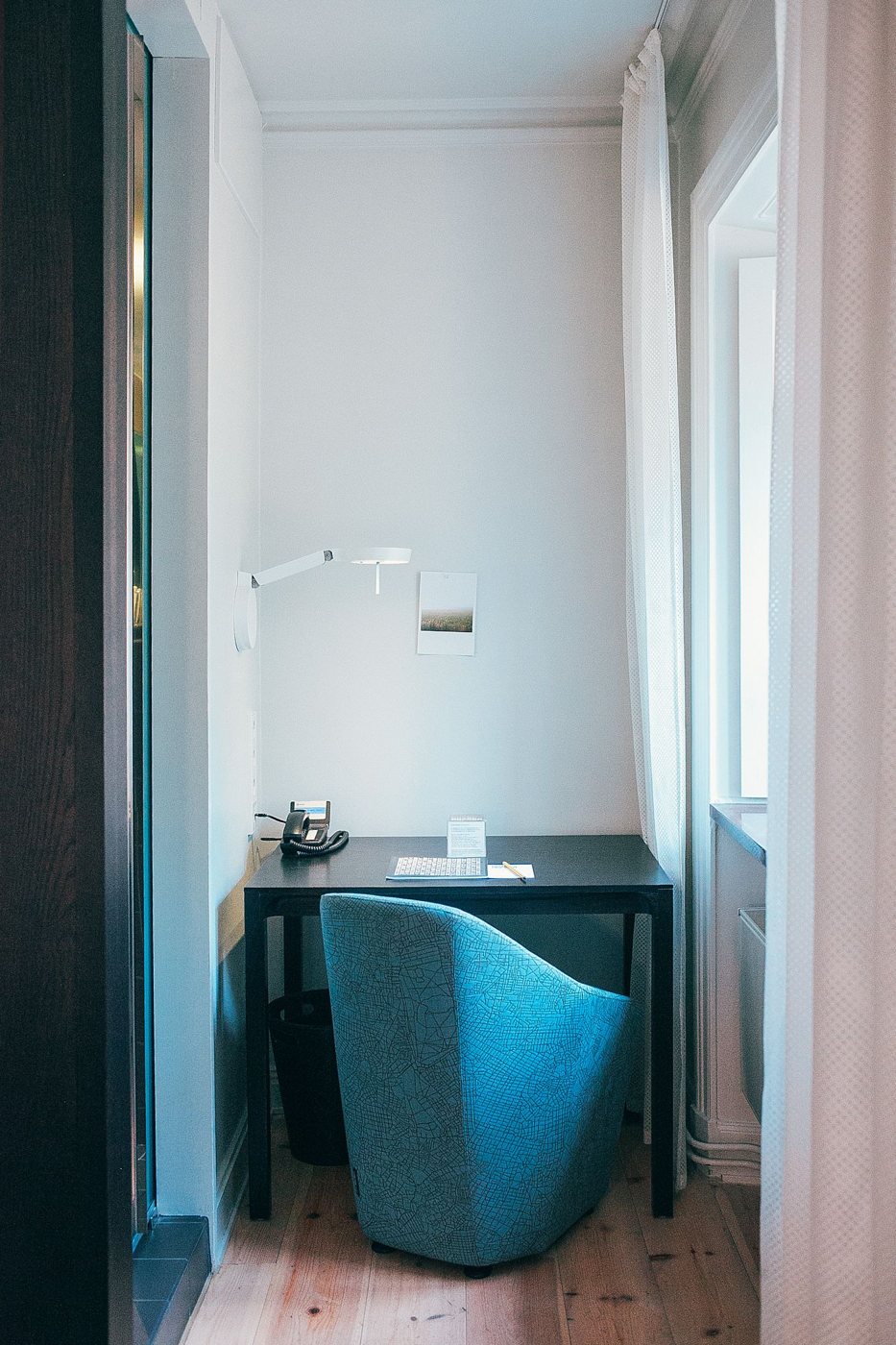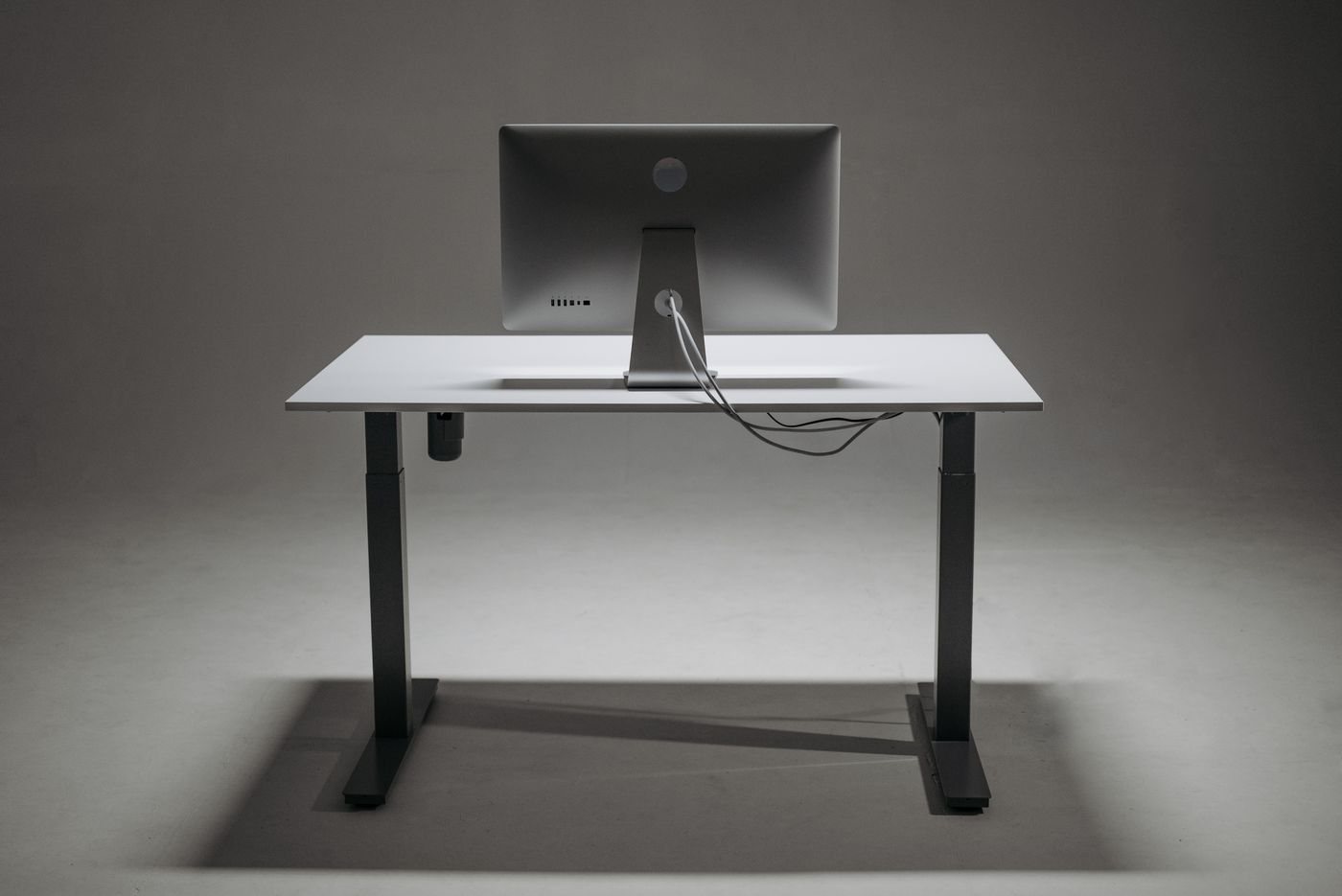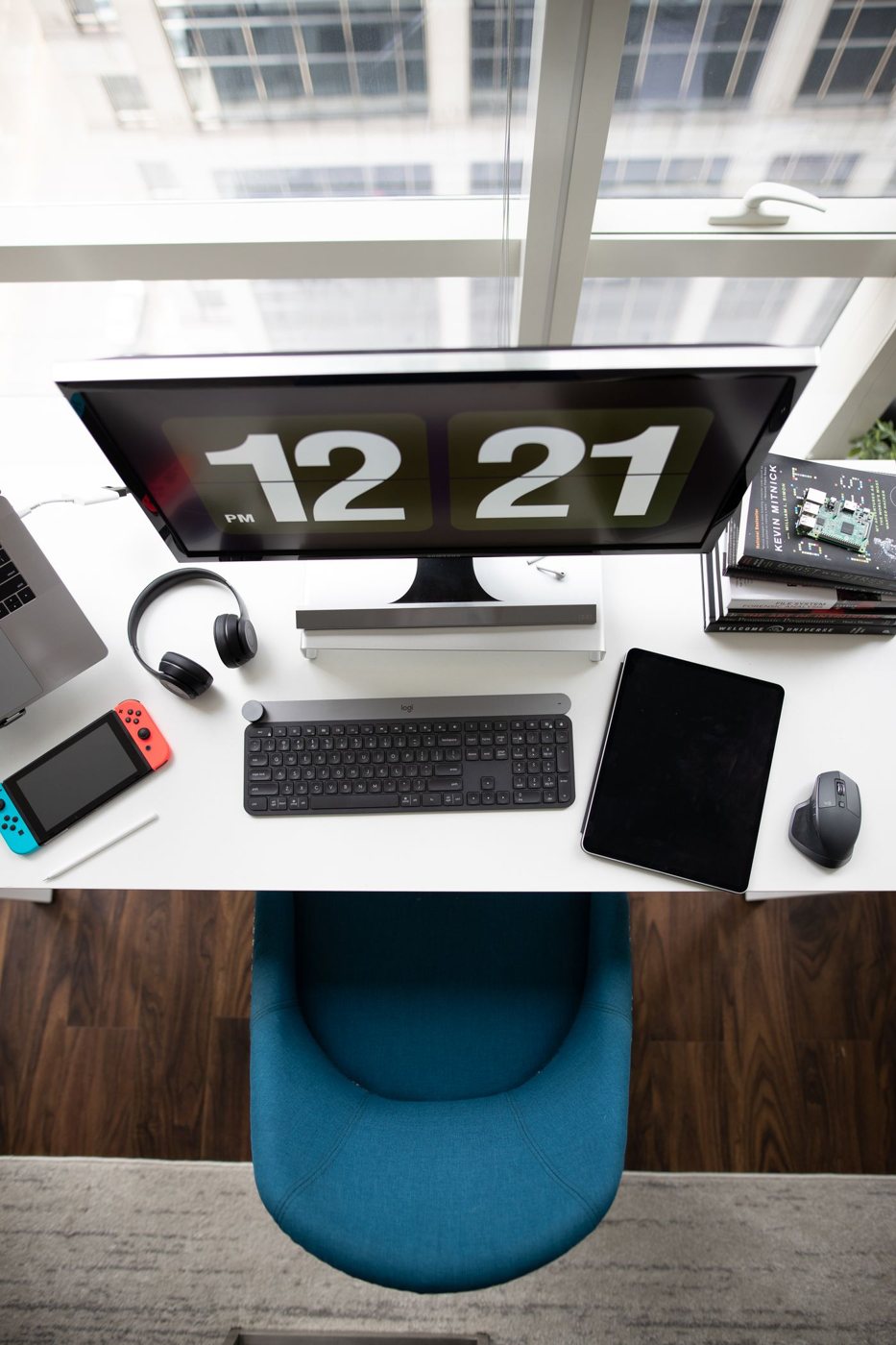
The most useful desk zones follow movement. A place for typing, a place for a reference document, and a place for incoming papers can reduce shuffling between tasks. The divisions do not need trays or labels. They simply need to make it clear where an object belongs while you are using it and where it goes afterward.
Begin with the task that occupies most of the day. Put its tools in the primary working position. Then add the reference material you consult repeatedly. A secondary screen, notebook, or printed instruction sheet should support the main task without displacing its controls. Avoid centering every object independently; the arrangement needs one coherent working position.
Distinguish three kinds of space
The active area holds what your hands use now. A supporting area holds material you look at or reach for occasionally. A temporary area receives items that have arrived but are not yet part of the task. On a small desk, these may be overlapping spaces used at different times rather than three permanent sections.
For example, a clear corner can hold a document during a call and return to being empty afterward. It does not need a dedicated organizer if the document is filed as soon as the call ends. A tray helps only when it solves a recurring problem, such as loose forms spreading into the keyboard area.
Follow the direction of your work
Consider where objects enter and leave. Papers may arrive from the left because a printer stands there, while completed documents go into a drawer on the right. A setup that requires crossing cables or moving a drink every time a page is filed will be harder to maintain. Test the flow with an ordinary task instead of arranging the desk solely from a seated photograph.
Shared desks need a little flexibility. Keep movable items easy to reposition and avoid assigning a layout that works only for one person's dominant hand. If equipment positions must change, allow the cables enough appropriate movement without creating loose loops across walking routes.
Review the boundaries when tasks change
Zones should not become excuses to preserve unused objects. If a permanent reference pile has not been consulted for weeks, move it to storage. If an active area continually spreads into another section, check whether the original space was realistic.
The point is to make the next action obvious. A clear place for a form to wait, a predictable location for the input devices, and somewhere to set down a temporary tool can be enough. More divisions are not automatically more organized, especially when they require constant rearrangement to perform normal work.