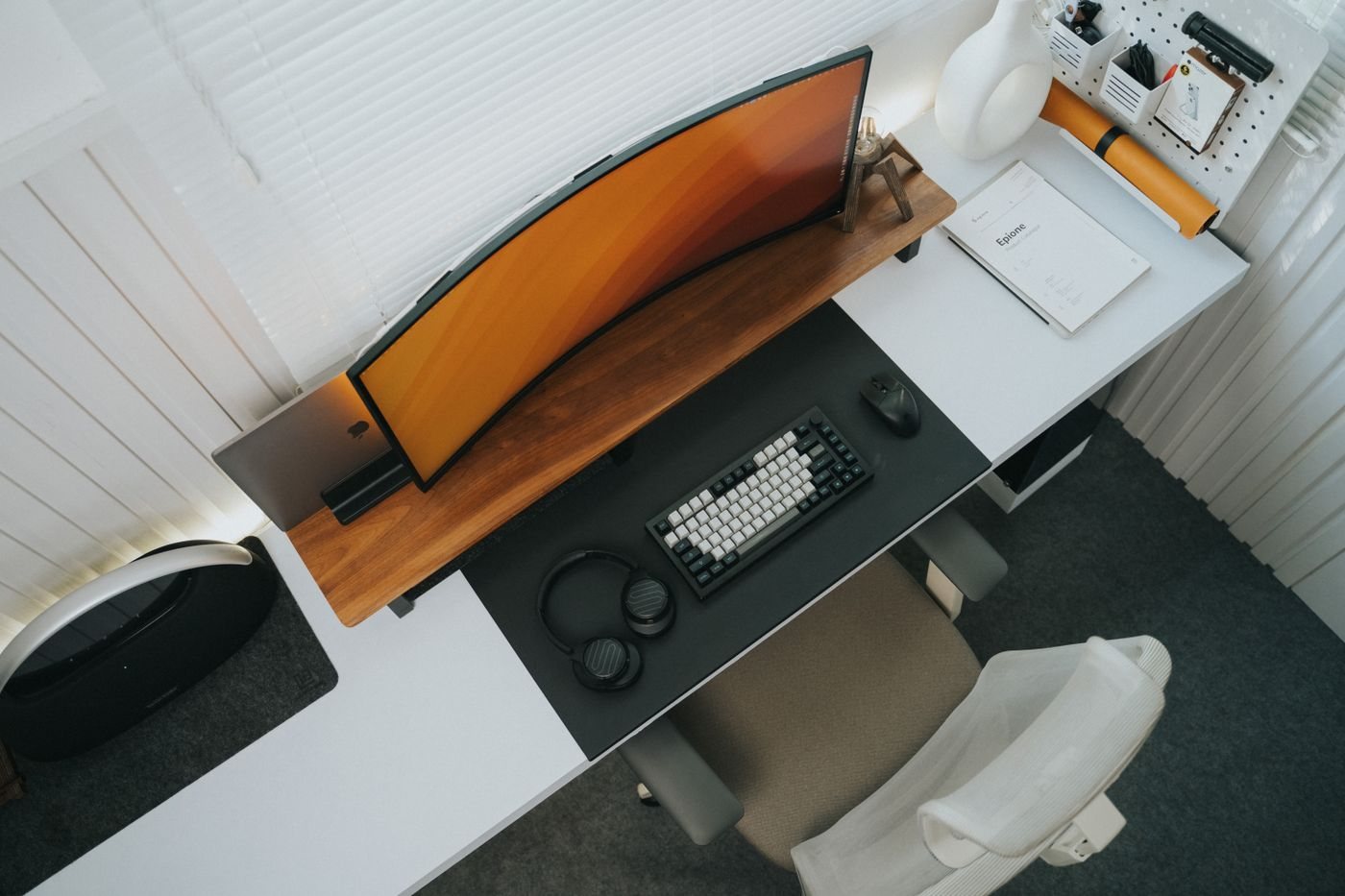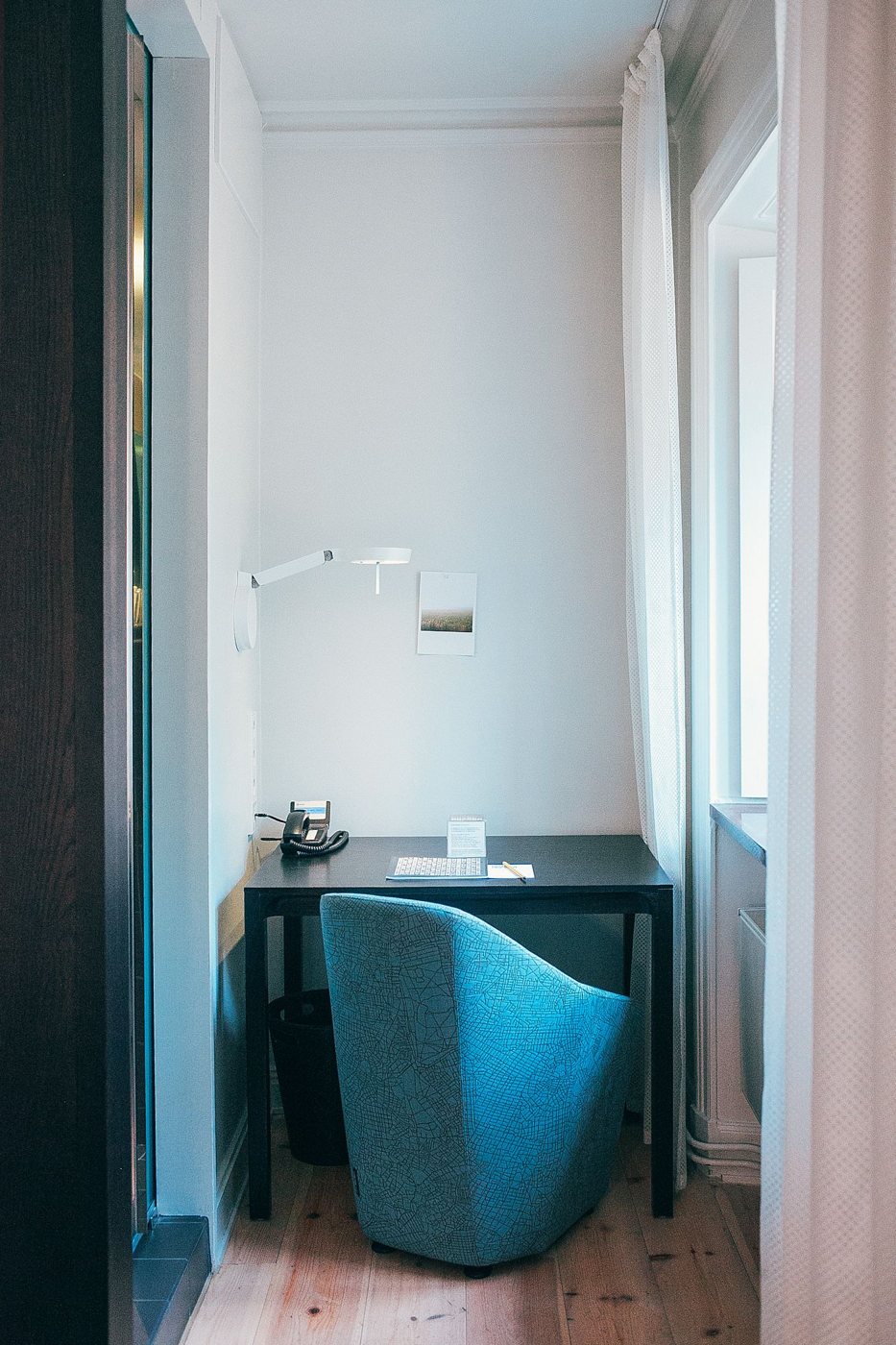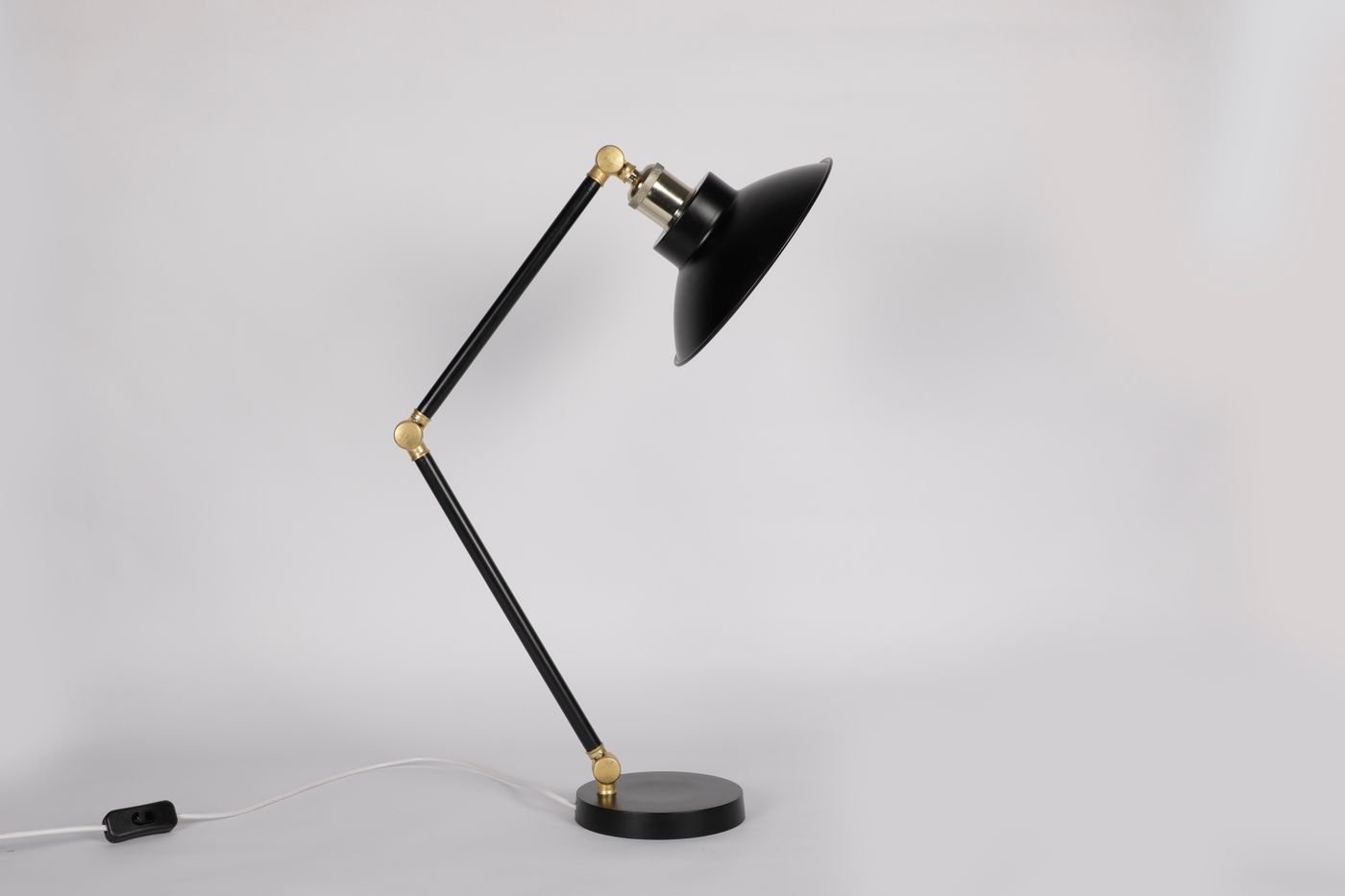
A lamp that looks compact in a product photograph may occupy the exact corner needed for a notebook. Another may illuminate the room while leaving a shadow over the page you are reading. Start with the task and the intended position, then compare the shape and controls of lamps that could serve that position.
For paper work, notice which hand casts a shadow when you write. For screen work, check whether the lamp's source or reflection appears in the display. A useful light arrangement may involve changing its direction or the room lighting before replacing the lamp itself. Avoid treating a single brightness setting as suitable for every activity and time of day.
Measure the base and the reach
Check the base footprint and the space swept by an adjustable arm. A lamp may fit while folded but collide with a screen when extended. If it clamps to the desk, verify the permitted surface thickness, underside clearance, and mounting instructions. A hollow or delicate tabletop should not be assumed suitable for any clamp.
Place a temporary object where the base would sit and carry out a normal task. Open a notebook, move the mouse, and reach for the keyboard. The lamp should not require you to thread your hands around it. Include the cable path and access to the power connection in this trial.
Look at controls you will actually use
Brightness adjustment can be useful when tasks change, provided the controls are easy to reach and understand. Consider whether an illuminated touch control would be distracting in the intended room. If a lamp remembers settings, confirm what happens after its power supply is disconnected rather than assuming every model behaves alike.
Check whether the light source or power supply can be replaced, and whether suitable parts are available. A replaceable bulb must match the lamp's stated specifications. Integrated lighting can simplify the shape but may have a different repair path. These are ownership questions, not automatic reasons to choose one design over another.
Evaluate the light in context
During a return period, use the lamp for the actual tasks and room conditions you bought it for. Look for unwanted reflections, awkward shadows, and controls that are difficult to reach. Keep the packaging and documentation until you have checked those conditions.
If the lamp solves the lighting task but creates a crowded surface, reconsider its mounting or location before adding more accessories. A suitable choice should fit the work, the desk, and the maintenance you are willing to perform. Decorative appearance can be part of that decision without replacing those requirements.