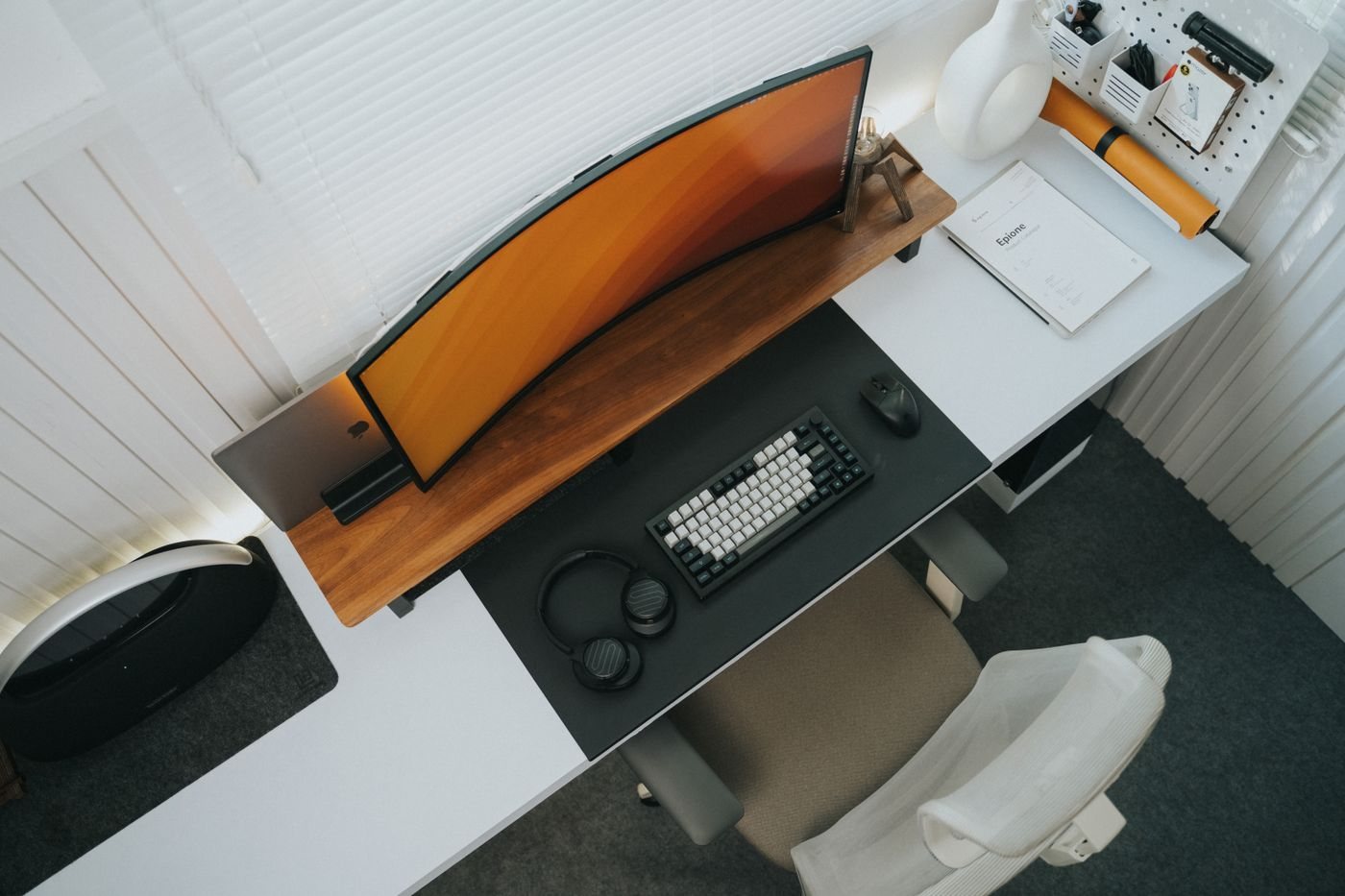
A desk mat can define a working area, provide a mouse surface, or protect a desktop from ordinary contact. Those are different jobs. Decide which one matters before choosing a large mat that covers most of the desk. If the existing surface already works well, adding another layer may create cleaning and fit questions without solving a problem.
Measure the keyboard, mouse movement area, and any writing space you want the mat to include. Mark the proposed boundary with paper. Check whether the keyboard feet sit entirely on the same level and whether your mouse will repeatedly cross the edge. A mat should not create a raised transition exactly where you normally move or write.
The surface needs to suit the tools used on it. A texture that works well for pointing may feel unsuitable beneath a single sheet of paper. A soft layer may affect the stability of small equipment. If you can examine a sample, test the actual tasks rather than judging only the finish or color.
Think about both sides
Check the backing material and whether the manufacturer describes it as suitable for your desk finish. Keep the underside and the desktop clean. Dirt trapped between them can defeat the reason for using a protective layer. Do not assume a mat is heat-resistant, waterproof, or safe for every coating unless those properties are specifically stated.
Review cleaning instructions before buying. Some materials tolerate wiping while others need a different method or drying time. Consider where the mat would dry without being folded or used damp. A large item that cannot be cleaned conveniently may be a poor fit for a desk that frequently handles food, craft materials, or messy paperwork.
If the mat arrives rolled, follow its instructions for flattening. Do not apply heat or heavy improvised weights without checking the material requirements. Persistent curling at an edge can interfere with equipment or hand movement and should be addressed through the product's intended process or return options.
After a week of use, lift the mat and inspect the surface underneath. Notice whether it has actually improved the task you selected. If it mainly hides clutter or makes access to a drawer harder, a smaller mat or a separate mouse surface may be more appropriate. The useful size is the one that supports the work, not necessarily the largest format offered.