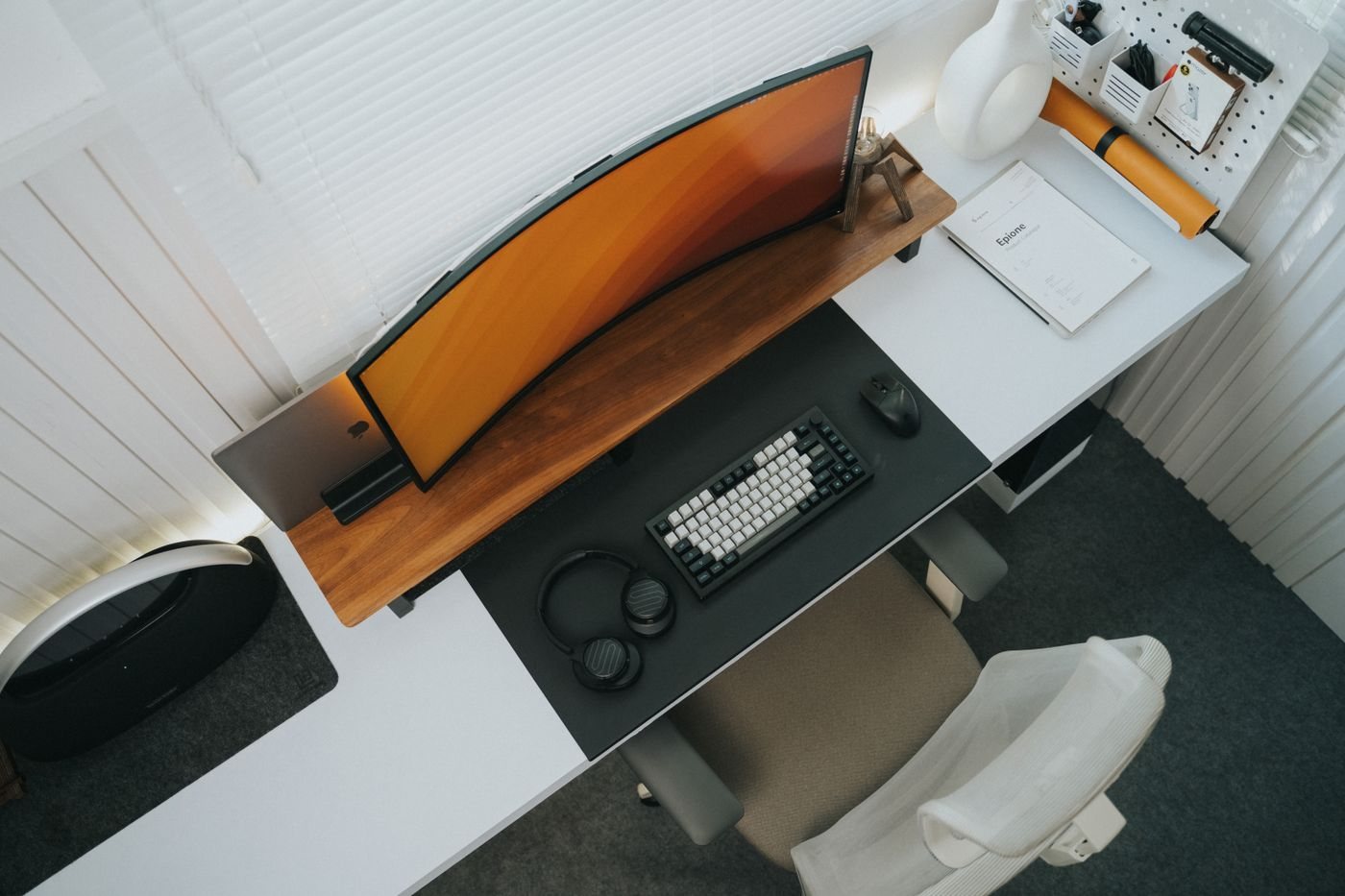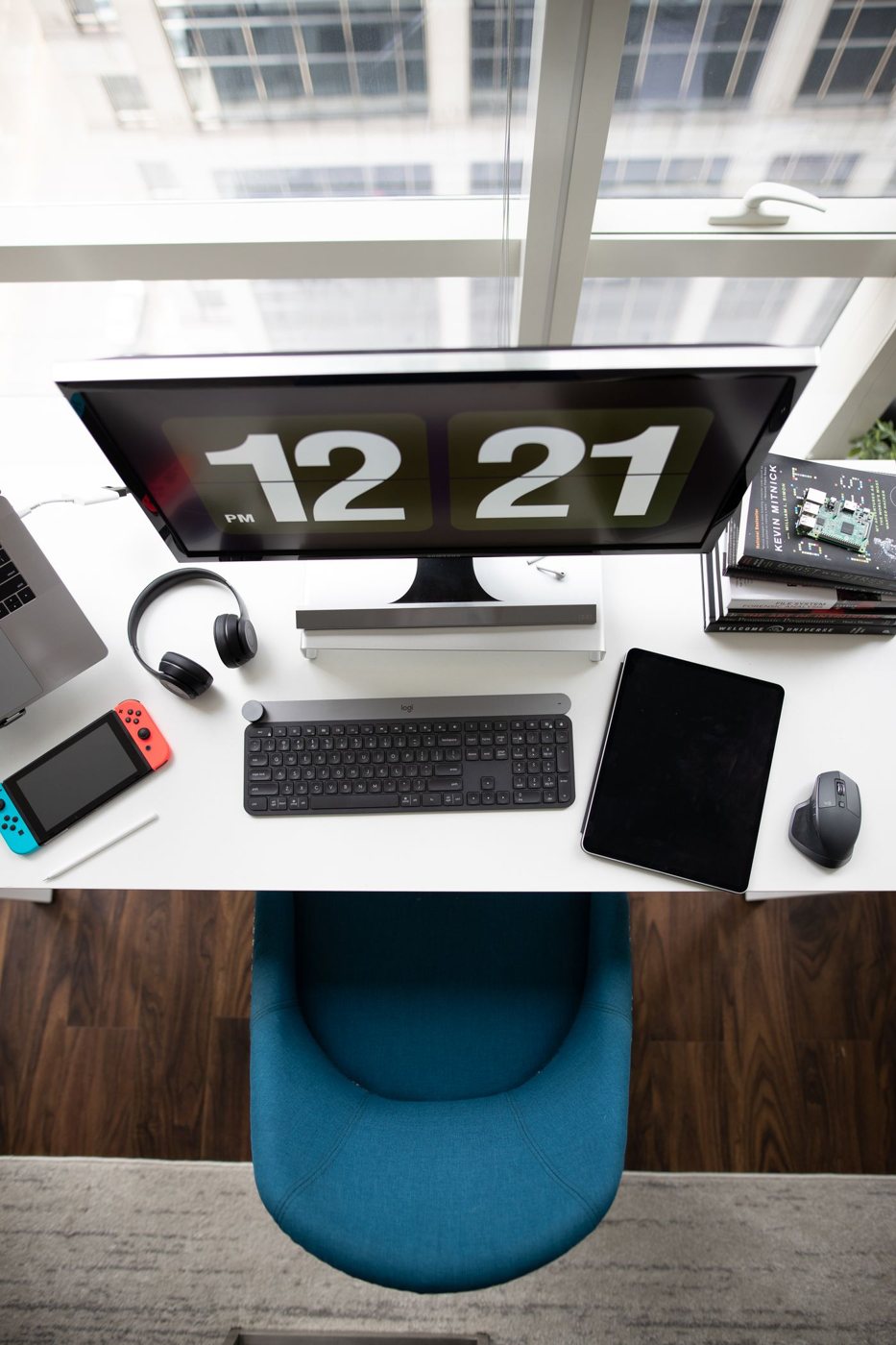
The most useful end-of-day reset preserves the state of your work and removes the obstacles to starting again. It is not a demand to make the desk look unused. A notebook left open at the right page may be more helpful than a completely empty surface.
Begin before closing applications. Save the documents you changed and check that important transfers or synchronization tasks have reached a suitable stopping point. If a process must continue, leave it running according to your workplace guidance rather than interrupting it to complete a tidying ritual.
Write one concrete next action. “Continue report” leaves tomorrow's decision unresolved; “check the figures in the second table against the supplier file” preserves a usable starting point. Store that note with the project or in the task system you actually consult.
Clear only the friction
Return borrowed accessories and put loose cables where they will not be trapped by a chair or drawer. Move cups and unrelated packaging away from equipment. Place papers needing a decision in an established inbox, keeping confidential material in its appropriate secure location.
Leave frequently used tools within reach. Repacking a keyboard, mouse, or daily notebook can add unnecessary work if the desk is not shared and those items belong there. The reset should make the next session easier, not create a nightly unpacking cycle.
If the space is shared, follow its handover rules. Remove personal material, sign out where required, and leave the shared connection available. A personal desk can retain more context, but it still needs an appropriate screen-lock or shutdown routine.
Keep the routine short enough to repeat
Choose a few actions you can complete consistently. A long checklist tends to compete with the workday's final tasks. Separate occasional cleaning, filing, and equipment maintenance from the daily reset unless they are immediately necessary.
Try the routine for several days and notice what still delays the next morning. Perhaps an uncharged device matters more than a straightened stack of paper, or an unclear next action causes more delay than any physical clutter. Adjust the routine around those observations.
On a rushed day, protect the essentials: preserve work, secure information, and record where to resume. The remaining tidying can wait. A closing routine succeeds when it reduces avoidable decisions at the next session while keeping the current work intact.