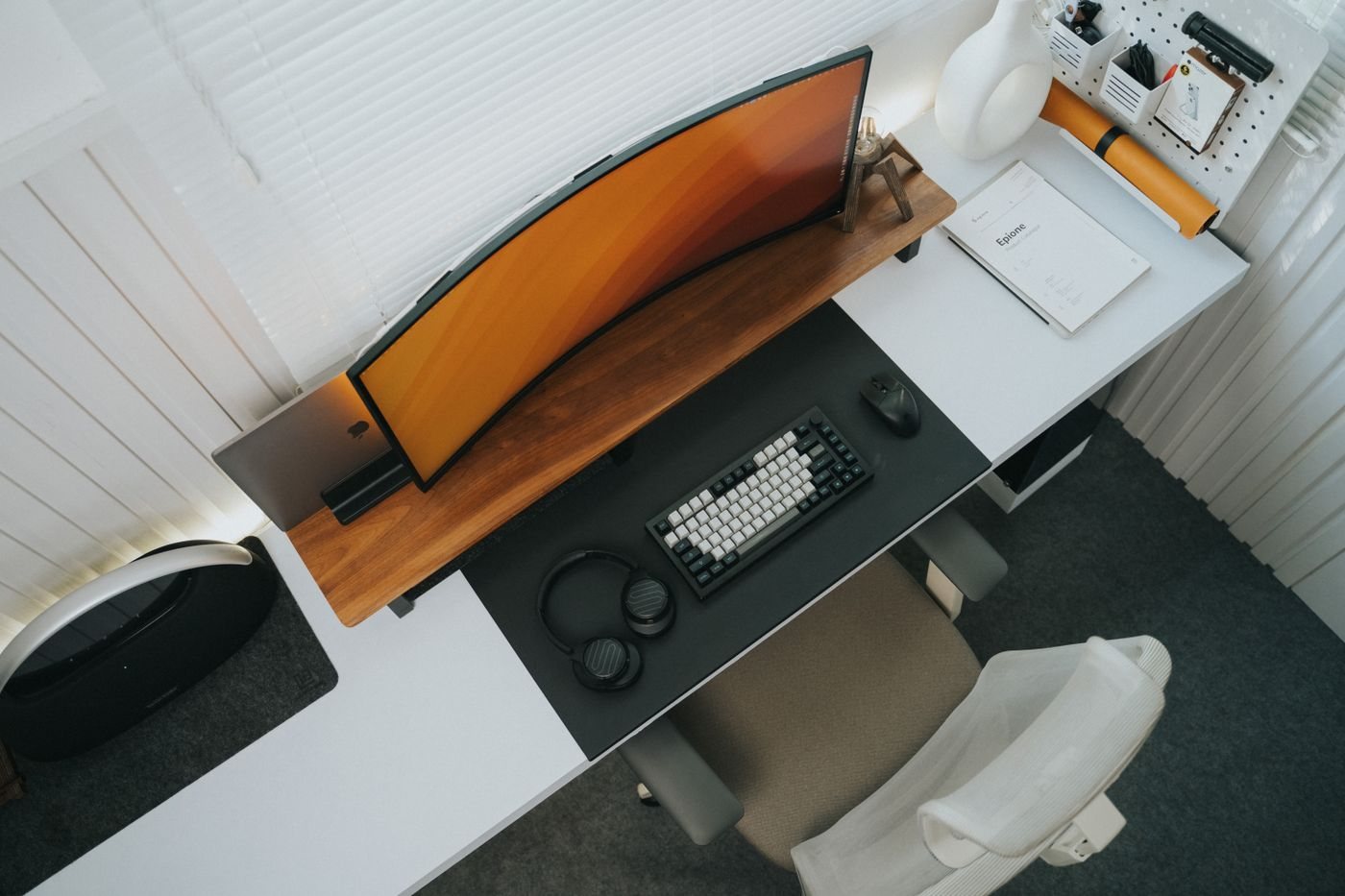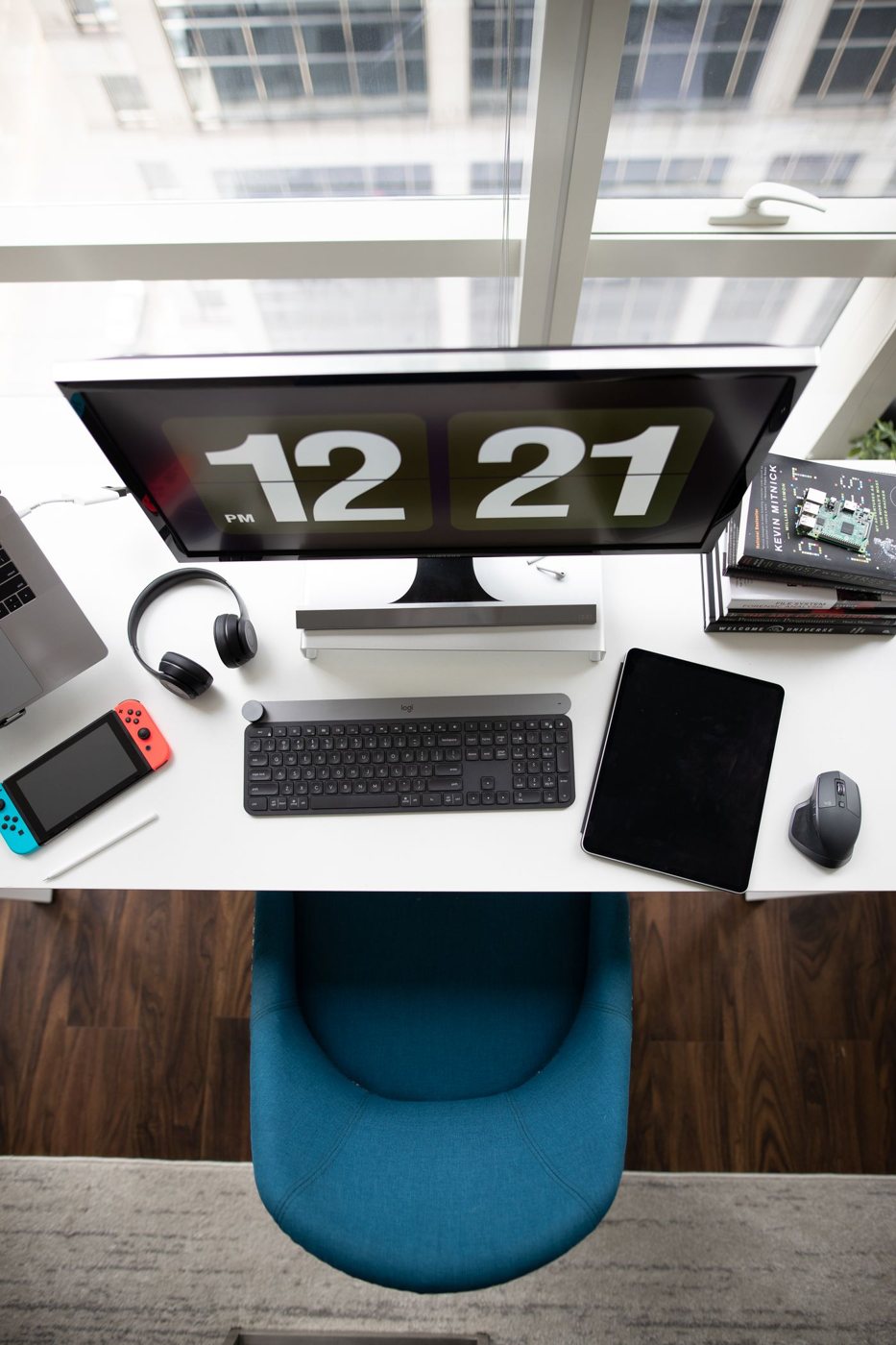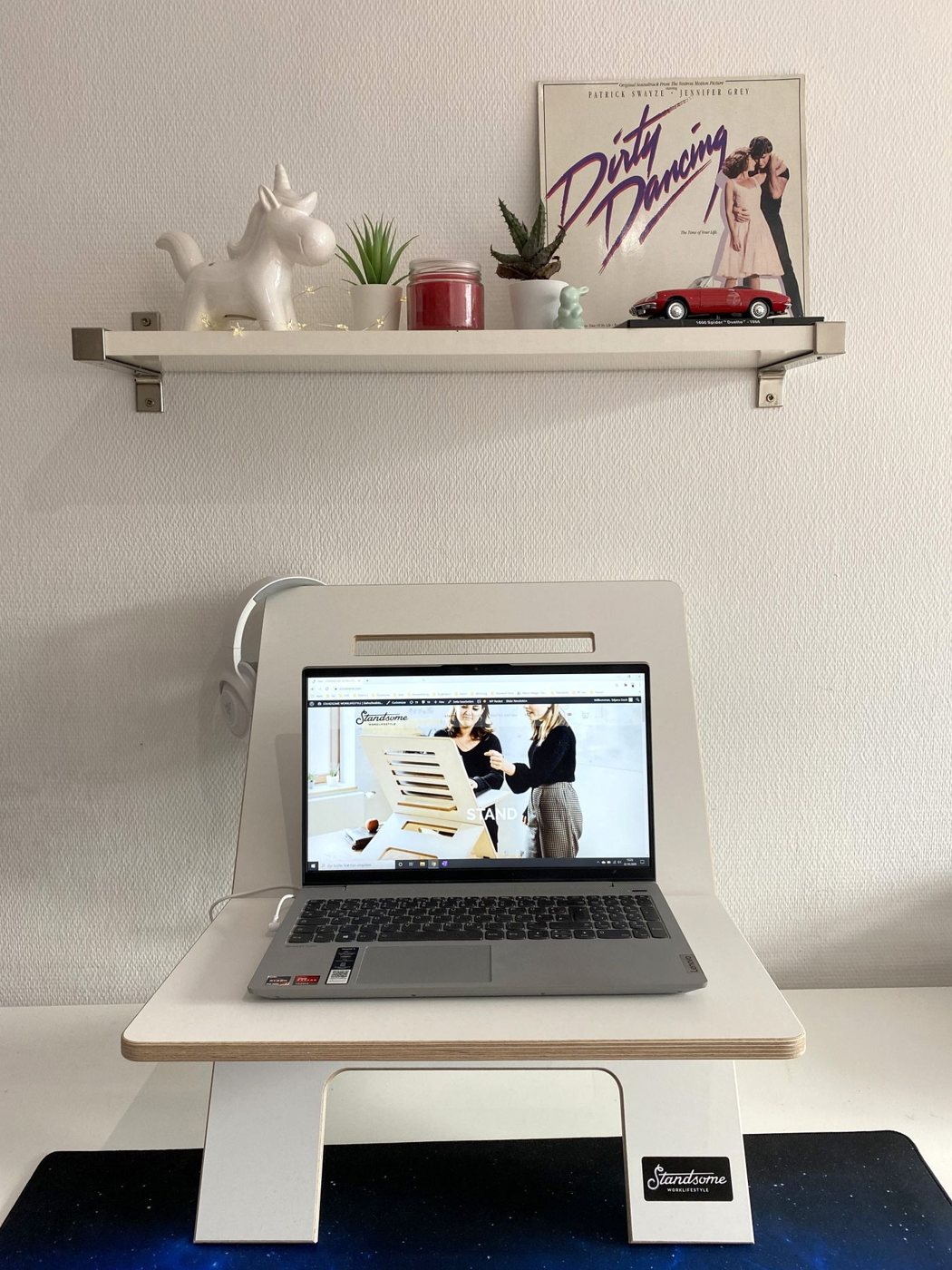
An office shelf is useful when it moves occasional equipment away from the main work surface without making that equipment awkward to use. Start with a list of what belongs there. A printer, spare keyboard, document box, and network device have different access requirements even if they fit within the same rectangle.
Measure equipment in its working state. A printer may need an open output tray, a raised scanner lid, and access to paper or ink compartments. Record those dimensions alongside the closed footprint. Leave room for connectors and the cable path rather than pushing everything against the rear panel.
Weight and position come first
Check the shelf manufacturer's load limits and installation instructions. Include accessories, paper, and other supplies in the planned load. Wall mounting requires suitable fixings for the actual wall construction; a convenient location does not establish that the surface can support it. If you cannot verify the installation, use an appropriate freestanding alternative or obtain qualified help.
Place equipment that requires frequent handling within a comfortable reach. Avoid arrangements where removing a heavy item involves stretching over the desk or lifting it above other equipment. Keep controls and status indicators visible when they are needed during normal operation.
Follow each device's ventilation instructions. Do not treat an unused gap as storage if the equipment needs that space for airflow. Shelves with doors can change the operating conditions, especially when several powered devices share a compartment.
Test the complete task
Before settling the arrangement, run through the work it must support. Load paper, retrieve a finished print, connect a cable, and reach the power control. A layout that passes a static measurement can still fail when a tray swings outward or a cable catches on another object.
Group supplies by device, but leave a clear boundary between consumables and active equipment. A labeled box for spare paper or cables is easier to remove than loose items tucked into ventilation gaps. Keep liquids elsewhere.
Review the shelf after a week of use. If you repeatedly move several objects to reach one control, change the arrangement. The aim is to reduce handling and keep the desk available, not merely to relocate a crowded surface to a higher position.