A card reader should be chosen from the cards you already use, or the exact cards required by your camera or other device. Write down the physical format and the markings on each card. Full-size SD and microSD are not the only formats in circulation, and similar-looking slots should not be treated as interchangeable.
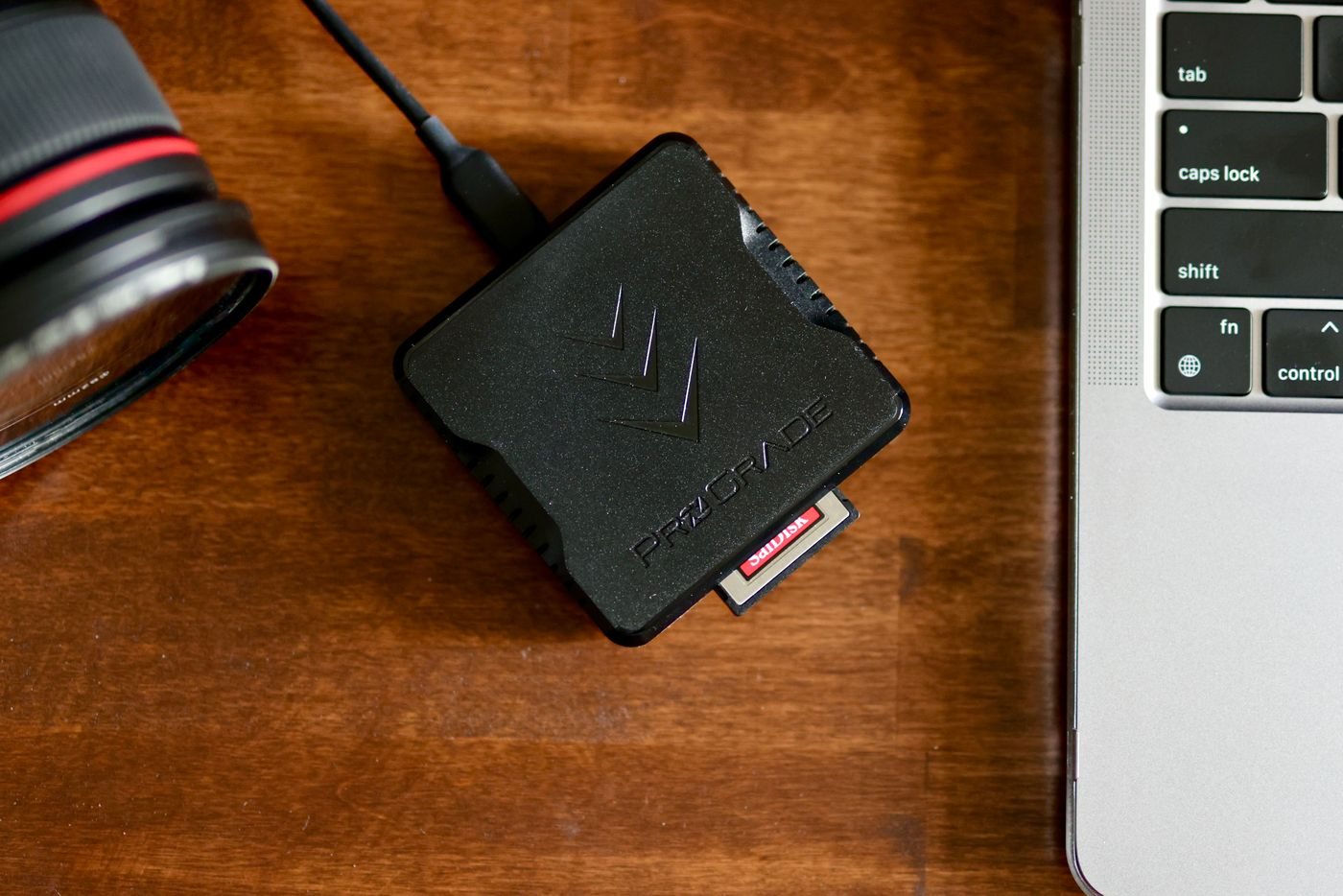
Check the reader's supported card families and standards in its documentation. Capacity support and interface support both matter. The SD Association notes that a reader or adapter can be needed when a computer's built-in slot does not support the card's standard. An adapter that changes the physical size does not necessarily provide a faster interface.
Distinguish recording requirements from copying speed
The card's speed-class symbols help match it to a recording device's requirements. They are not a guarantee that every reader will import at the same speed. For transfers, the card, reader, host connection, and files all affect the result. Check the relevant bus support instead of selecting a reader from a card's largest printed number alone.
If you import from several cards, consider whether the reader can use its slots simultaneously. Some multi-slot products share resources or permit only certain combinations. A detachable host cable can be convenient, but keep a known-compatible cable with the reader rather than using an unidentified charging lead.
Protect the import
Set the reader on a stable surface where the cable will not be pulled. Insert a card in the documented orientation without forcing it. If the system asks to format a card that contains important images, stop and investigate; formatting is not a harmless step toward viewing those files.
Copy the contents to the planned destination and check that the import completed. Open representative files, including a larger video if that is part of the set. Keep the original card intact until the files exist in the backup arrangement you intended. Seeing thumbnails in an application does not by itself establish that every original file has been copied.
Use safe removal before disconnecting the reader or card, following the device and operating-system instructions. Store cards in a protective holder with a clear distinction between used and ready-to-use media. A simple label or separate compartment can prevent overwriting the wrong card during a busy session.
When choosing between readers, favor documented compatibility and a reliable workflow over unused slots. The right reader makes the transfer predictable without changing how carefully you handle the only copy of a recording.