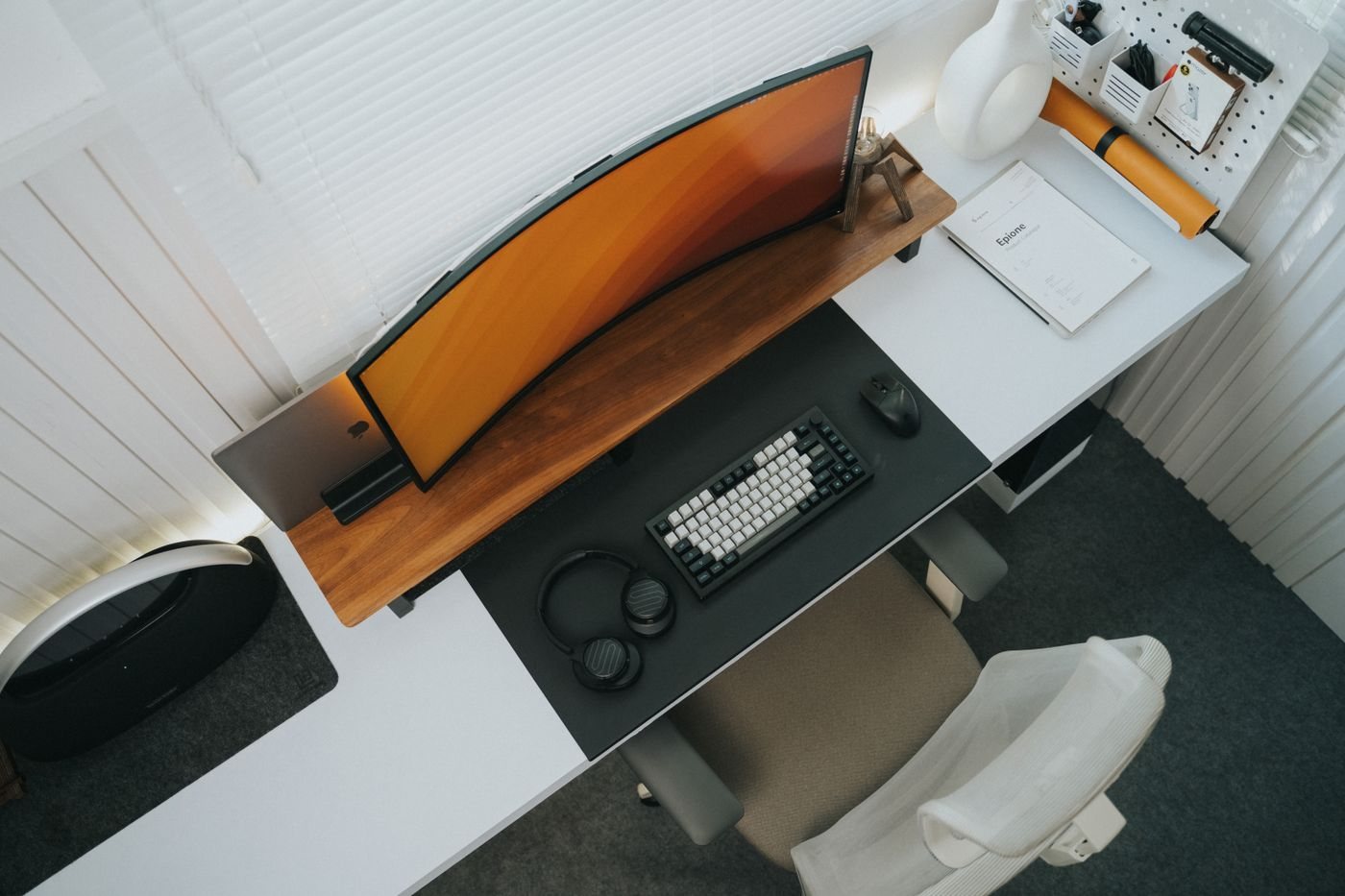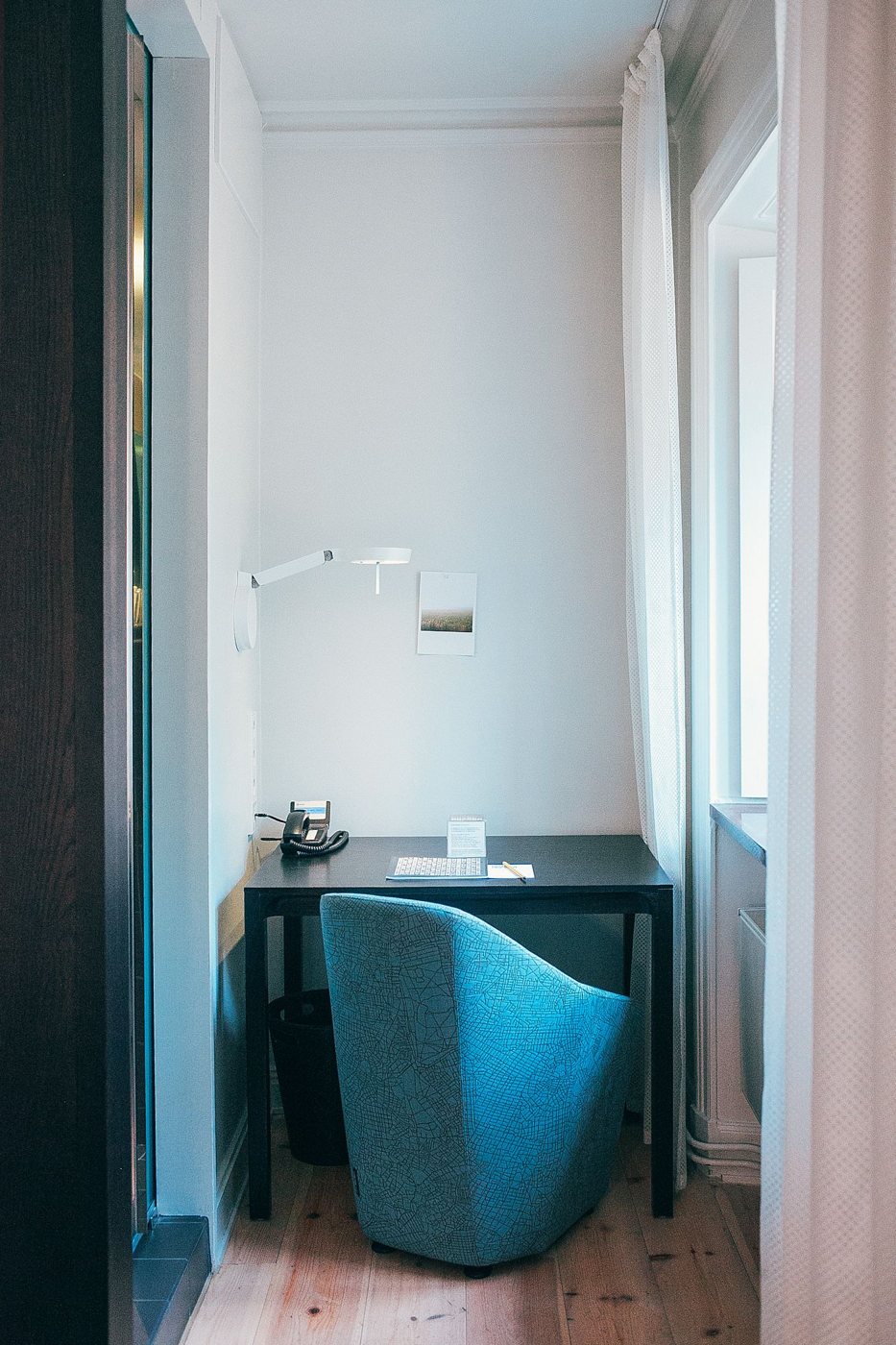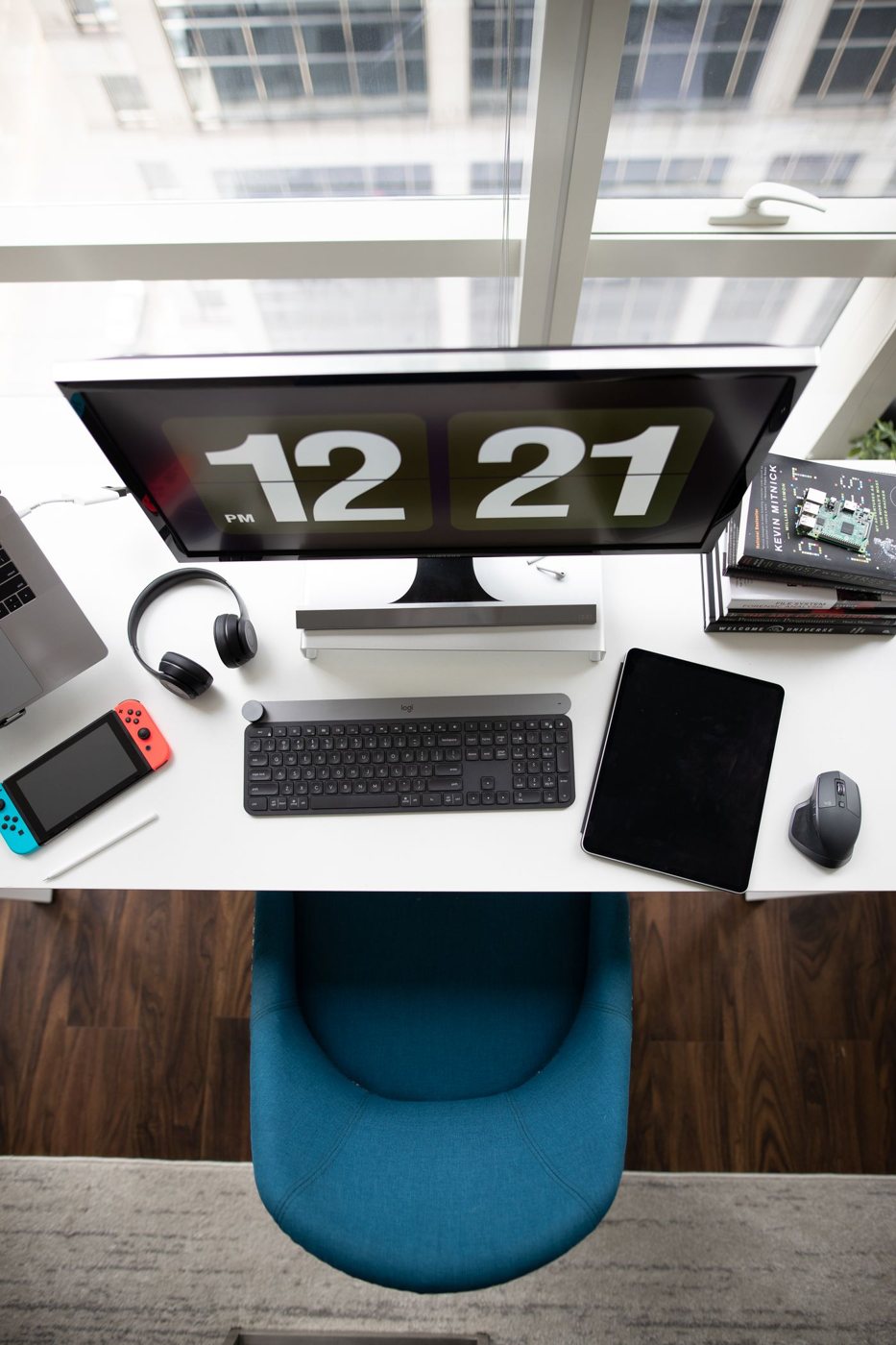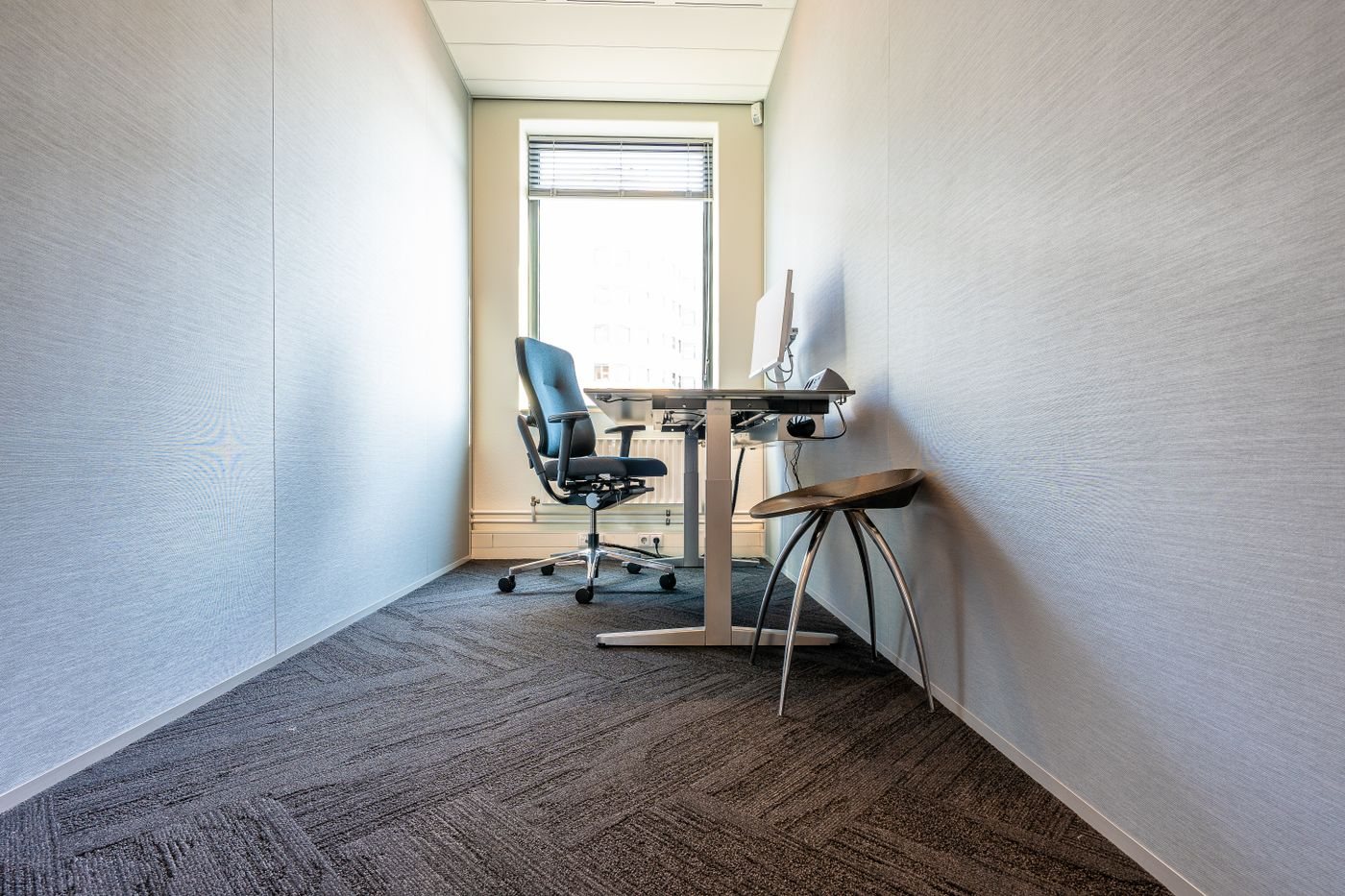
A desk beside a window can look ideal during an evening viewing and behave very differently on a bright morning. The direction and strength of daylight change, while reflections depend on the screen and your seated position. Check the room at more than one time before committing to a heavy desk or a fixed monitor mount.
Begin by observing where direct light falls. Notice whether it crosses the screen, reaches the working surface, or appears behind you during calls. You do not need a technical lighting plan to identify a reflection that makes your normal document difficult to read. Record the time and position so you can compare alternatives rather than relying on a single impression.
Try an angle before changing the room
A modest change in screen angle or desk position may reduce a reflection. Test it with a real application open, not just a dark display. Keep the keyboard and chair in a usable relationship while moving the screen. Solving glare by making yourself sit sideways to the whole setup may create a different problem.
Consider blinds or other suitable light control if the room has changing conditions. Make sure you can reach and operate them without climbing over equipment. OSHA's workstation environment guidance identifies glare as something to address through the arrangement of light and screens. It does not make one window direction universally correct for every room.
Preserve access and airflow
Do not block the operation of the window or any required access route. Account for handles, inward-opening sections, radiators, and curtains when measuring the furniture position. A cable that is clear of the desk can still interfere with a moving window or become caught behind furniture.
Think about the equipment left in the space when you are away. Follow its environmental and ventilation requirements. An attractive window ledge is not automatically an appropriate storage place for devices exposed to direct sun, moisture, or changing temperatures.
Compare the whole working day
If video calls matter, inspect the camera view as well as the screen view. A bright background can make a camera struggle to represent a face clearly. Changing the camera direction or controlling the background light may help more than buying a new camera.
Use the best candidate position for several ordinary sessions before adding permanent fittings. Note what needs adjustment in the morning, afternoon, and after dark. The aim is a location you can manage with a few predictable changes, not a position that works only in one photograph or at one hour.